Natural History of Galapagos


Galapagos Online ToursGalapagos Expert

Conservation

For millions of years the Galapagos Islands went undisturbed by man. Shortly after their discovery in 1535 visitors began to pillage the island's natural resources. Tortoises, whales and fur seals were all hunted to near extinction. Plants and animals were introduced to the islands, which changed the natural balance of life and further endangered the native species. In the 1930's, with the advent of William Bebe's book Galapagos the World's End the first laws were passed to protect this area. Unfortunately since there was no enforcement of the laws they had little effect.

Finally in 1959, the 100th anniversary of the publishing of Charles Darwin's The Origin of Species, the first real progress in conservation was made. A non-profit organization dedicated to scientific research and conservation of the islands was established as the Charles Darwin Foundation. The government of Ecuador also established 90% of the islands as the Galapagos National Park the same year. Together they have had an established presence in the islands since the 1960's and are working towards preservation of the Galapagos National Park and Galapagos Marine Reserve.

Human Impact

For many Ecuadorians the Galapagos Islands is a modern day El Dorado offering economic growth, plenty of work opportunities, and 50% higher salaries than on the mainland. In a country of 40% unemployment, the draw of the islands is hard to resist. The population growth in the settlement areas is astronomical and land prices have soared. The government's attempts to pass laws to curtail the influx of settlers have all met with opposition from the general populous who feel they too have the right to take advantage of this bonanza.  In 2007 President Correa has put the conservation of Galapagos as a national priority.  The government is now monitoring the immigration of all those who enter the Galapagos.  Additionally beginning in December 2007 the government began removing people from the islands who did not have proper documentation.

Tourism is not without its problems. Tourism has grown from 60,000 visitors in 2000 to more than 150,000 people a visiting the islands in 2006 the increase in waste disposal the shear number of people and the pressures it creates on the islands. Many visitor sites with delicate conditions including lava formations that restrict the size of the boats allowed to visit them in order to minimize the damage.

Introduced Species

The Galapagos Island's unique ecosystem is based on the lack of competition that some plants and animals have received over millions of years. The lack of predatory mammals has allowed tortoises to rule the islands. Since humans began arriving in the Galapagos, they have brought with them plants and animals that did not occur there previously.

Herbivores, like goats, compete for the little available food with Tortoises and Land Iguanas making it so there is not enough food to support the native creatures.

  Introduced Species

Pigs and goats destroy nests and eat bird and reptile eggs. Wild dogs have attacked colonies of Land Iguanas on Santa Cruz and Isabela for sport, killing hundreds of iguanas and leaving them to rot.

Introduced plants have spread through the islands competing with the native plants for nutrients. Guava seeds have been planted around the islands by the introduced cattle and Quinine seeds by the wind. Many of the native plants like Scalesia and Miconia are endangered from the introduced plants.

The National Park Service is working to eradicate the introduced species and restrict the import of new species. Park officials and various ships' crewmembers organize hunting parties to eradicate goats, cats, dogs, and pigs. Visitors are asked not to bring anything onto the island in an effort control the introduction. They are also asked to wash their feet when returning to the boat in order to control the spreading of organisms between islands.

Restoring Endangered Species

One of the most successful programs to date has been that of restoring the native populations. Captive breeding and rearing programs have been enacted. These programs, combined with the eradication of the introduced species, have led to a dramatic turn around in several of the islands species.

Land Iguanas were nearly extinct on Santa Cruz and Isabela a captive breeding program has allowed hundreds of young iguanas to be reintroduced to both islands. That project, teamed with the eradication of cats and dogs in the region, has allowed the Land Iguana population to bounce back.

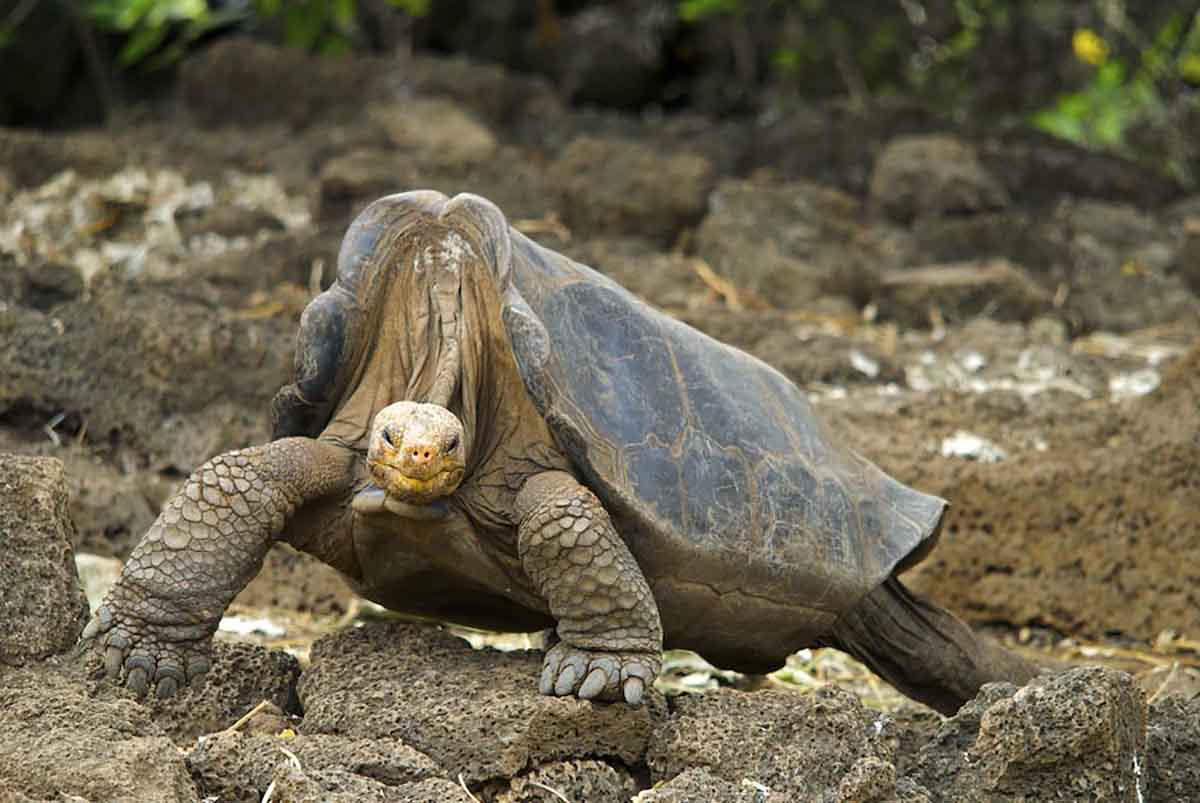
Miraculously a third male was discovered at the San Diego Zoo and brought to the Darwin Station to join the others in a captive breeding program. These 13 tortoises are the parents of over 300 young tortoises now roam free on Espaņola.


c 1999-2008 Galapagos Online Tours.  All rights reserved