Santiago
Also known as James and San Salvador the central location and numerous landing sites make Santiago a part of almost every
Galapagos itinerary. A favorite island for
pirates and
whalers,
Santiago has a long human history as well as some outstanding opportunities for wildlife
viewing. Highlights of a visit include the
Fur Seal grotto,
Pink Flamingo
lagoon as well as the chance to see Galapagos Hawks and Vermilion Fly Catchers. Once rich in vegetation,
feral goats
were released on the island in the 1880's. The goats thrived in the
lush environment eating everything in sight and their numbers grew to over
100,000.
Their presence has severely impacted the island's flora and
fauna. The
National
Park Service working toward eradication, have improved the situation. Still, it is not unusual for visitors to
see goats or signs of their presence.
During the 1920's and again in the 1960's human impact again took its toll on
Santiago. Near
Puerto Egas
salt mining operations were attempted. Great effort was put into
extracting salt from the crater though little profit was made and the venture
was abandoned. Equipment and building were left behind some still
remaining on the island today.
Visitor sites are located on both the east and west sides of the island, making
multiple visits likely on longer trips. Many cruises may stop here en route to
Tower
or include sites in conjunction with visiting
Bartolome or
Sombrero Chino.
Visitors on Santiago
A visit to Puerto Egas begins with a wet landing on the dark
sand beaches of James Bay. The visit begins with a walk along the rocky
coast giving visitors the opportunity to view some of the Galapagos Island's
best tide pools. Sponges, snails, hermit crabs, barnacles and fish
including the endemic four-eyed blenny can be seen. The walk also presents
visitors with a variety of shore birds,
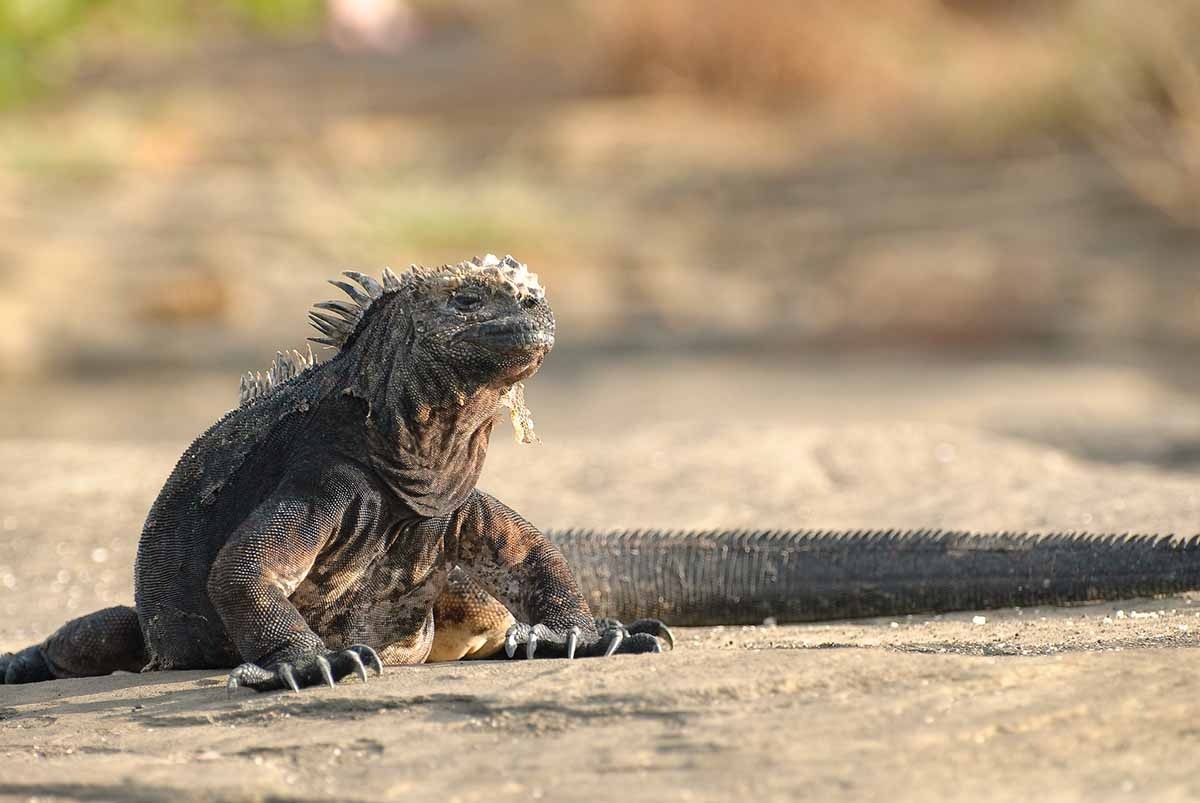
marine iguanas, sally light foot crabs
and
sea
lions.
There are two interesting excursions normally visited from Puerto
Egas. The first is a short walk from the landing site brings visitors to the site
of one of the Galapagos' first entrepreneur endeavors. For decades salt
was extracted from a local salt crater. The industry was abandoned in the
1950's leaving behind a variety of rusted old machines and parts of
buildings. The trail follows the path once used by wagon trains to the
crater cone.
The steep trail is easy, but can often seem one of the hottest
hikes in the islands.
Feral goats prune the arid vegetation, which lines the trail.
The goats feed on any leaf within reach leaving little
left for the endemic island creatures. Bird lovers will be delighted with the opportunity to catch a
glimpse of one of
Darwin's
Finches, the endemic Galapagos Hawk, or the colorful
Vermillion Flycatcher.
Finally reaching the crater rim presents an incredible
vista. Looking into the crater you are able to see this extinct volcano
whose floor has sunken below sea level. Salt water seeps into the crater
creating a small salt lake. The sun evaporates the water, leaving the salt that many have tried to mine without success.
Looking away from the crater are the older orange lava fields
supporting vegetation including the Palo Santo trees and the younger
desolate black lava fields.
The second excursion begins just a short distance beyond the tide pools is the fur seal grotto.
Fur Seals
and
Sea Lions can be seen swimming in the rocky lava ringed pools. This may be the only opportunity
visitors have to see and swim with fur seals.
Fur seals were once hunted to near extinction for
their coats. The Galapagos Fur Seal is the smallest of the Fur Seals found in the
Southern Hemisphere, now compare in numbers with the sea lions. During the day they hide from the hot equatorial sun in shelves
or caves of the rocky lava cliffs. At night they feed on squid and fish avoiding the
sharks, which are their natural predator.
The crystal clear water, volcanic bridges, fur seals and sea lions make this a
magnificent place for swimming and snorkeling.
|
