Baltra
Bartolome
Daphne
Espaņola
Fernandina
Floreana
Isabela
Mosquera
North Seymour
Plazas
Rabida
San Cristobal
Santa Cruz
Santa Fe
Santiago
Sombrero Chino
Tower
ESPAŅOLA
Approximately a 10-12 hour trip from Santa Cruz, Espaņola is the oldest and the southernmost island in the chain. The trip across open waters can be quite rough especially during August and September.
Espaņola's remote location helped make it a unique jewel with a large number of endemic creatures. Secluded from the other islands, wildlife on Espaņola adapted to the island's environment and natural resources. The subspecies of Marine iguana from Espaņola are the only ones that change color during breeding season.
Normally, marine iguanas are black in color, a camouflage, making it difficult for predators to differentiate between the iguanas and the black lava rocks where they live. On Espaņola adult marine iguanas are brightly colored with a reddish tint except during mating season when their color changes to more of a greenish shade.
The Hood Mockingbird is also endemic to the island. These brazen birds have no fear of man and frequently land on visitors heads and shoulders searching for food. The Hood Mockingbird is slightly larger than other mockingbirds found in the Galapagos; its beak is longer and has a more curved shape. The Hood Mockingbird is the only carnivorous one of the species feeding on a variety of insects, turtle hatchlings and sea lion placentas.
Wildlife is the highlight of Espaņola and the star of the show is the waved albatross. The island's steep cliffs serve as the perfect runways for these large birds which take off for their ocean feeding grounds near the mainland of Ecuador and Peru abandoning the island between January and March. Known as endemic to the island, Espaņola is the waved albatross's only nesting place. Each April the males return to Espaņola followed shortly thereafter by the females. Mating for life, their ritual begins with the male's annual dance to re-attract his mate. The performance can take up to 5 days consisting of a series of strutting, honking, and beak fencing. Once the pair is reacquainted they produce a single egg and share the responsibility of incubation. The colony remains based on Espaņola until December when the chick is fully grown. By January most of the colony leaves the island to fish along the Humboldt Current. Young albatross do not return to Espaņola until their 4th or 5th year when they return to seek a mate.
Geographically Espaņola is a classic example of a shield volcano, created from a single caldera in the center of the island. Over the years as the island has moved further away from the hot spot, the volcano became extinct and erosion began to occur.
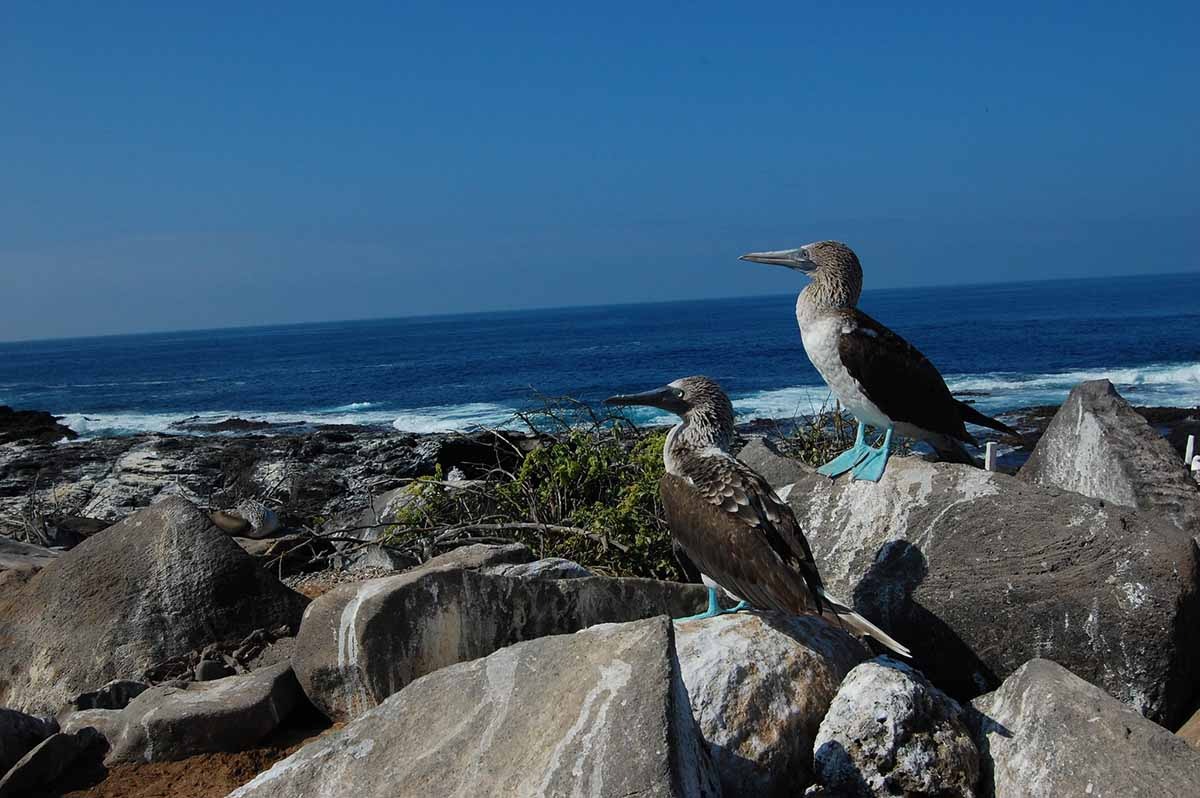
Espaņola's two visitor sites offer an exceptional island visit. Gardner Bay is a favorite destination for swimming and snorkeling as well as offering a great beach. Punta Suarez is one of the highlights of the Galapagos Islands. The variety and quantity of wildlife assures a memorable visit. Visitors find migrant, resident, and endemic wildlife including brightly colored Marine Iguanas, Espaņola Lava Lizards, Hood Mockingbirds, Swallow Tailed Gulls, Blue Footed and Masked Boobies, Galapagos Hawks, a selection of Finch, and the Waved Albatross.
GARDNER BAY
Is located on the northeastern portion of the island offers a magnificent long, white sandy beach, where colonies of sea lions laze in the sun, sea turtles swim offshore, and inquisitive mockingbirds boldly investigate. The beach considered an open area where you are free to explore.
Snorkeling at Gardner Bay is fantastic. This is often your first chance to swim with the Sea Lions and this is an opportunity not to be missed. Further out towards Tortuga Rock and Gardner Island schools of large colorful tropical fish including yellow tailed surgeon fish, king angelfish and bump-head parrot fish swim along with an occasional manta ray gliding by and white-tipped sharks napping on the bottom.
Visit Information
Landing: wet landing
Highlights: open area, sea lion colonies, most inquisitive mockingbirds in Galapagos
Conditions: long powdery white sand beach
Notes: bring plenty of water and sunscreen. Be cautious not to disturb sea turtle nests
PUNTA SUAREZ
Found on the western tip of Espaņola, Punta Suarez offers great wildlife such as sea lions, sea birds and the largest marine iguanas of Galapagos.
This is one of the best sites in the Galapagos. The amount of wildlife is overwhelming. Along the beach there are many sea lions and large, colorful lava lizards and marine iguanas. As you follow the trail to the cliff's edge masked boobies can be found nesting among the rock formations. After a short walk down to a beach and back up the other side blue-footed boobies are seen nesting just off the trail.
The Galapagos Dove and very friendly Hood Mockingbird are commonly found in this area. The nearby bushes are frequently home to the large-cactus finch, warbler finch, small-ground finch and large-billed flycatcher.
Continuing down the trail you come to the only place where waved albatross nest in the islands. Some 12,000 pairs nest on Espaņola each year. The feeling is very dramatic and it seems like a desolate wilderness as the waves crash on the jagged cliffs below and the blowhole shoots water 50-70 feet/15-30 meters into the air. The sky above is full of sea birds including red-billed tropicbirds, American Oystercatchers, swallow-tailed gulls, and Audubon's Shearwaters.
Visit Information
Highlights: mating or nesting albatross, marine iguanas, and blue footed boobies, Galapagos Hawk sightings
Conditions: the rocky, uneven trail can be one of the more difficult in the islands.
Notes: bring water, good hiking shoes be careful not to walk off trail and disturb nests


Š 1999-2010 Galapagos Online Tours & Cruises all rights reserved
