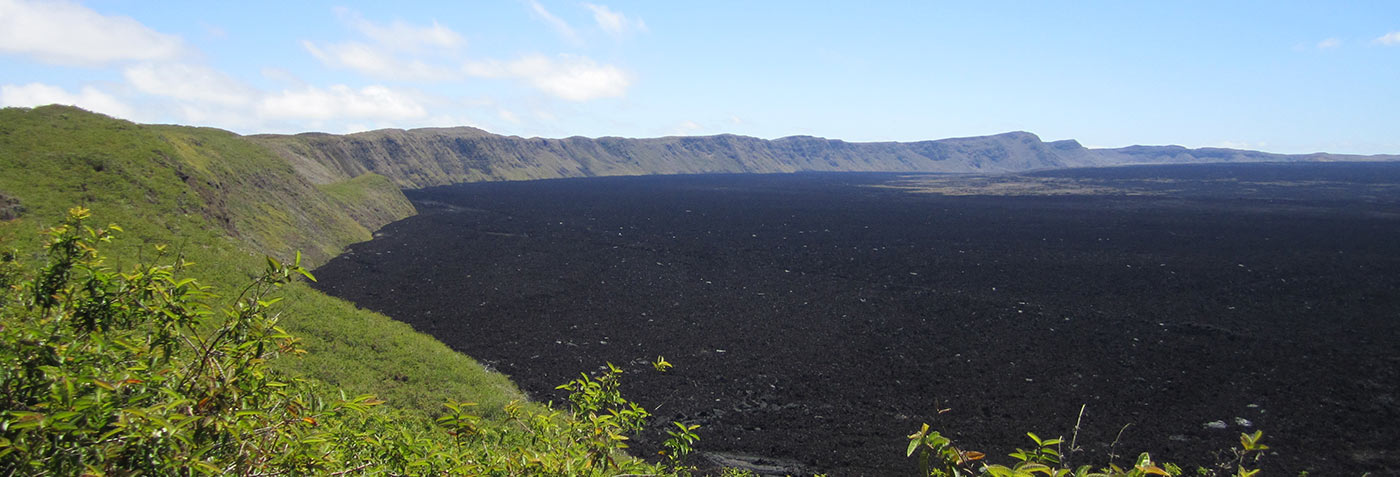
Galapagos Islands Geology
A key part of understanding the unique environment of the Galapagos Islands is gaining an appreciation of how and why they came into existence, the specific circumstances that created them and the Geology that forms this spectacular landscape.
Like many other oceanic islands, the Galapagos Islands are the product of a mantle plume. This happens when a section of rock, deep within the earth’s surface (the exact depth from which the plumes originate is still a matter of debate) becomes superheated, up to 200˚C hotter than normal.
The extreme heat makes the rock less dense than the surrounding Geology, causing it to rise up through the earth’s surface until it reaches the cooler temperatures in the outer layers and is prevented from rising further by the overlying Lithosphere.
As the plume decompresses and cools, it begins to ‘melt’. This melt, or magma, forms in microscopic channels that, as they’re less dense than the surrounding rock, rise rapidly to the surface, forming magma chambers as they meet in the lithosphere.
Generally, the lithosphere extends to around 100km beneath the oceans, and 200km beneath the continents. However, below the Galapagos Islands, the lithosphere is relatively young and only around 15km thick.
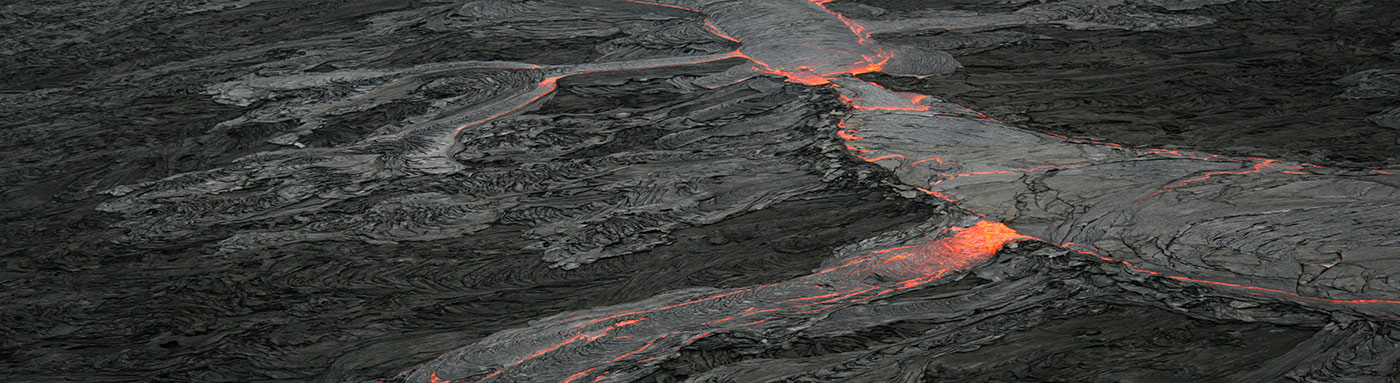
Occasionally, the magma trapped in the chambers of the lithosphere – still at temperatures of around 1400˚C – forces its way upwards, producing a volcanic eruption on the surface.
Successive eruptions over thousands of years begin to form a volcano. And this, combined with the constant upward force of the plume on the lithosphere, forms the Galapagos platform.
This environment, though relatively young compared to the rest of the earth’s geology, has been slowly developing over hundreds of thousands of years, gradually forming into the unique biosphere that we see today. A landscape truly born from the very depths of the earth’s core.
It is possible to visit the Galapagos geological wonders on a Geology oriented tour, specific sights of interest would be Sullivan Bay and Bartolome Island as well as the lava tunnels in the highlands of Santa Cruz amongst other remnants of volcanic activity.