Galapagos Islands Mangroves
Mangrove forests habitat in the coastal zone of Galapagos
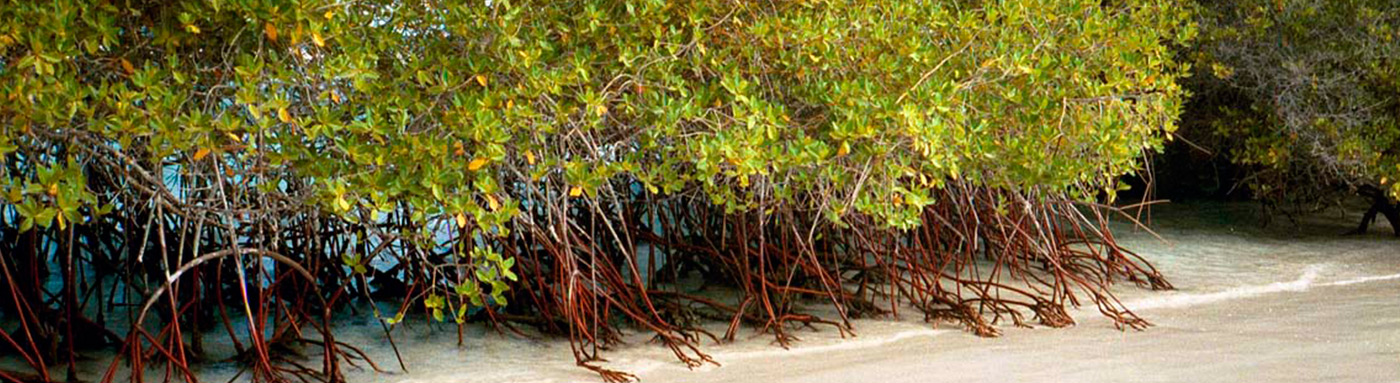
Extending along the shores of many islands, one finds forests of Galapagos mangrove of four species: red, black, white and button. A rich concentration of nutrients and plankton flows in and out with the tides, making mangrove forests important breeding and nursery grounds for fishes and invertebrates. They are also used as nesting sites by many birds.
Mangrove Swamps consist of a variety of salt-tolerant trees and shrubs that thrive in shallow and muddy saltwater or brackish waters. Mangroves can easily be identified by their root system. These roots have been specially adapted to their conditions by extending above the water. Vertical branches, pneumatophores, act as aerating organs filtering the salt out and allowing the leaves to receive fresh water.
Mangroves are thought to have originated in the Far East, then over millions of years, the plants and seeds floated west across the ocean to the Galapagos Islands. Mangroves live within specific zones in their ecosystem. Depending on the species they occur along the shoreline, in sheltered bays, and others are found further inland in estuaries. Mangroves also vary in height depending on species and environment.
There are four kinds of mangroves in the Galapagos Islands: the black mangrove, the red mangrove, the white mangrove, and the buttonwood mangrove. These different types of mangroves can be found all around the archipelago, but there are some differences you need to know if you want to visit the islands.
Black Mangrove
The Black Mangrove has silvery green leaves and a dark trunk that can grow to almost 40 feet tall. This specific type of mangrove has salt-extraction glands that are unique to this species; even if you see the leaves, you may see crystals of salt on the surface. The mangrove tree can be identified by the short aerial roots and the tentacle roots, which grow up vertically from the ground.
Red Mangrove
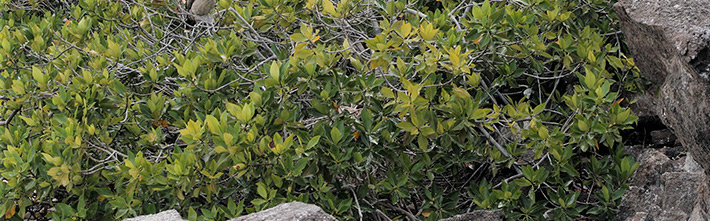
The Red Mangrove is found more often in the Galapagos. They can easily be identified by the woody reddish color and that's where they got their name. They can grow to 30 feet tall, their roots filter the salt to allow them to get the water it needs to survive without the damaging salt. Another characteristic of the red mangrove is the blooming, the flowers can be recognized by their size there are small and yellow and has a pleasant smell to attract insects to pollinated the flowers.
White Mangrove
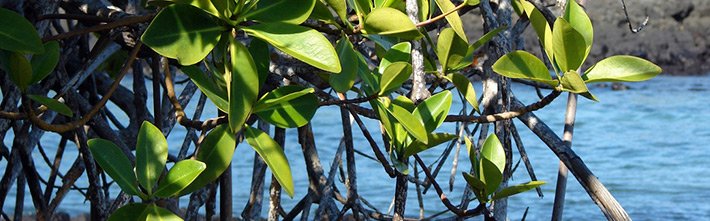
White mangroves have stilted roots and no visible aerial roots; they have delicate white flowers, and the time for blooming is from spring to summer. These types of mangroves are the least cold-tolerant of all the types present in the archipelago.

Button Mangrove
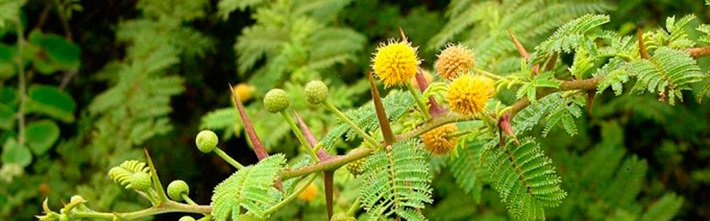
The button mangrove does not belong to the mangrove family but is often found near mangroves that grow higher up. It also has a root system above ground and can be recognized by the button-like appearance of the flowers.