
Scuba Diving in Galapagos - Diving Cruises
Scuba Diving in Galapagos
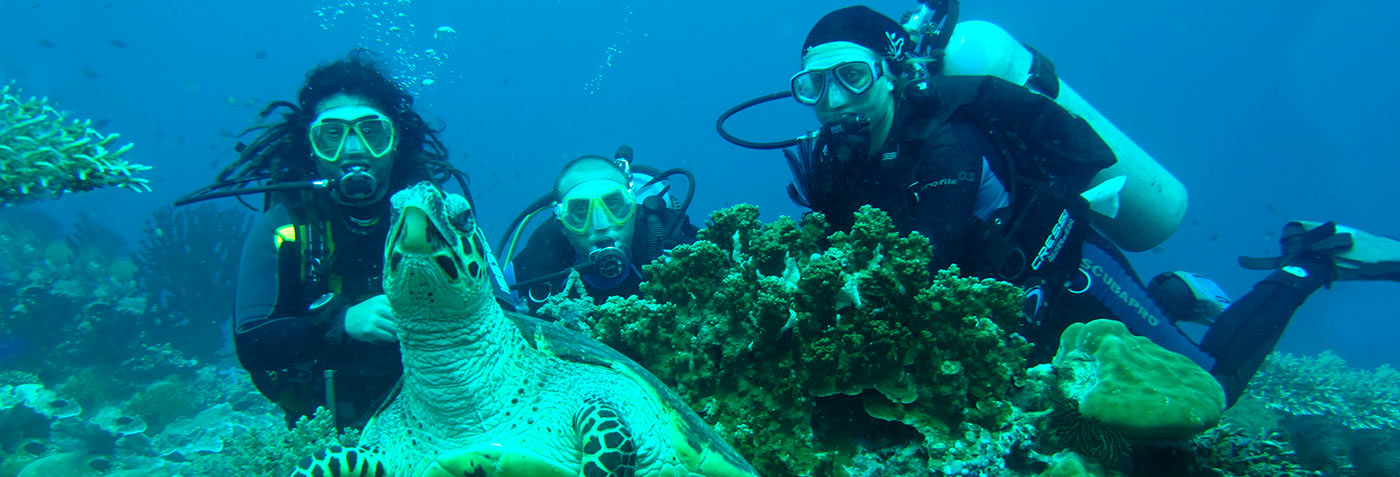
For many of us, taking walking tours around the beautiful Galapagos Islands simply isn’t enough, and as such, more and more people are taking full advantage of the Galapagos scuba diving opportunities available to experienced and intermediate level divers on the islands.
To scuba dive in the Galapagos islands is to partake in an experience like no other, for as the islands themselves are famed for their flora and fauna, the reefs and coves surrounding them can take intimate wildlife experiences to a whole new level. Here we find an underwater landscape vastly different from the coral reefs found in other diving resorts, with the volcanic activity of the islands encouraging a much wider, wilder and more unique range of underwater species. The shores of the Galapagos islands keep up the area’s reputation for diversity of fauna, with several large and small species jostling for space in the rocky inlets which are a feature of all the major and minor Galapagos islands.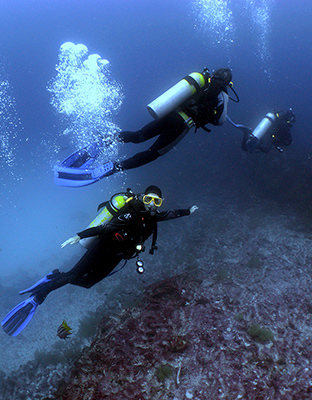
Be guided by experts into the deep
It is worth noting that Galapagos scuba diving is not for the inexperienced or unsteady. In fact, the Galapagos can be a very challenging place in which to dive, with cold waters, heavy currents and strong surges being a well known feature of the coasts here. However, there are many specially trained diving experts on hand to guide you through your underwater adventure, and ensure that you commence and end your dives in safe places, with people on hand to aid you and help you feel safe and secure.
You will never find yourself diving in dangerous conditions or bad weather, and you’ll always have the correct equipment (including wetsuits and diving weights, amongst others) provided to assist you and ensure you have the experience of a lifetime.
The Galapagos Scuba Experience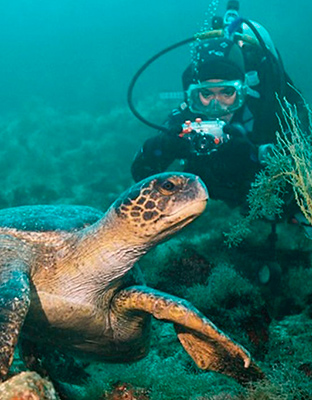
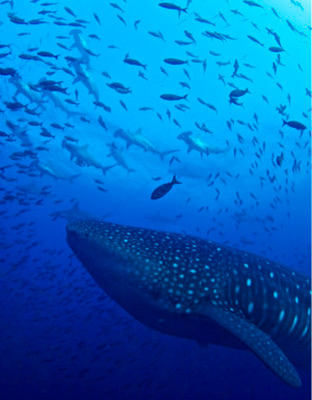
A day experiencing Galapagos scuba diving is a day like no other – you never know quite what you are going to find! You could be swimming through vast schools of fish, or watching the famous marine iguanas eating their seaweed diet from the underwater rock features. Maybe you’ll be lucky enough to catch in your sights some of the giants of the ocean; Galapagos sharks, white tip sharks, hammerheads, whale sharks, possibly even the vast humpback or sperm whales who occasionally stop by these incredible shores on their long migratory journeys.
For wildlife photographers, nature enthusiasts and those looking for a new challenge which will yield incredible views, scuba diving in the Galapagos islands is an experience which will not be soon forgotten.
Important Dates
 After several attempts to protect the surrounding waters, in March 13, 1996, the Galapagos Marine Reserve was declared with 70.000 square Km. and 1.400 Km of coast.
- In 1990 shark fishing was prohibited
- In 1992 the Galapagos was declared a “Whale’s Sanctuary”.
- In 1985 United Nations declared the Galapagos a “Reserve of the Biosphere”
- In 1989 CEDAM Intl. Declared the Galapagos “One of the seven underwater wonders of the world”
- In 2001 was declared “Natural Heritage”
Why dive in Galapagos?
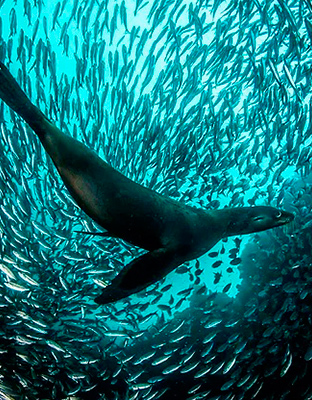 Diving in the Galapagos Islands is varied, exciting and beautiful. The southern and central islands offer a diversity of dive sites that include everything from the smallest nudibranch to an occasional Humpback or Sperm Whale. Dive with sea lions, turtles, stingrays. dolphin and schools of fish beyond your imagination. The Galapagos is a unique, world-class diving location, yet it remains relatively unknown among diving aficionados. And precisely because this underwater world has yet to be “discovered,” it still remains private, pristine and relatively unexplored. Voyagers Travel long ago realized the awesome potential of this magical diving site and have been operating its Underwater Galapagos program for the past ten years.
The Galapagos is a chain of relatively young volcanic islands (some of which are still active), located a 90-minute flight from the Ecuadorian mainland.
This fortuitously positions the islands at the confluence of three distinct oceanic currents, thus creating a sea of contradictions, as well as one of the highest levels of marine endemism anywhere in the world; nearly one in four species is unique to the islands.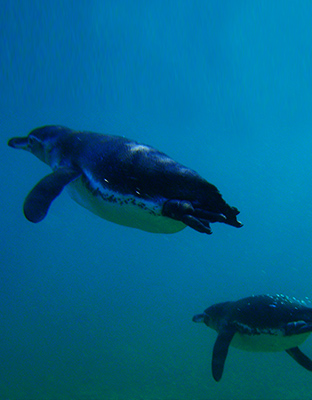
In the Galapagos, expect the unexpected: Penguins swim among mangroves in the company of rainbow-colored reef fish while whale sharks and schools of hammerheads circle above Moorish idols A diver in the Galapagos can swim eye to eye with sea lions, sea turtles, giant mantas and hammerhead sharks in addition to tropical reef fish. On land the visitors will find yourself side-stepping over impish land iguanas, nesting blue-footed boobies and scuttling sally lightfoot crabs.
In December 2001 Rodale’s Scuba Diving Magazine awarded the Galapagos Islands their Readers Top Choice Awards in the following categories :
- First best dive destination in world (tied with Papua New Guinea)
- First best fish life in the Pacific & Indian Ocean
- First healthiest marine environment in the Pacific & Indian Ocean
- First best place in the world to dive with big animals
- First best-advanced diving destination in the Pacific & Indian Ocean
- First top destination in Pacific & Indian Ocean a diver would return to
- Second best value destination in the Pacific & Indian Ocean
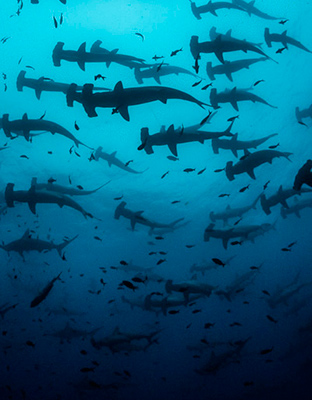 It is important to know that diving in the Galapagos is recommended for experienced divers only. Most of the good diving sites have strong currents, surge, and cold waters
Diving Sites
Genovesa Island
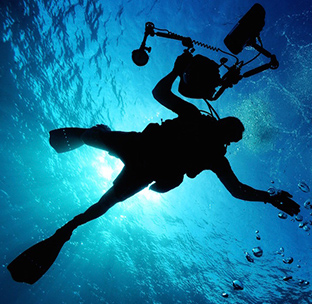
- Offers several dive sites on the east coast or inside Darwin Bay. Both areas are accessible for beginners or advanced divers.
- The breeze often affects the east side dive site, so there may be a surface chop. Frequently there will be a mild to the strong current running parallel to the shore. The visibility may be from 12 to 20 meters.
- The dive site inside Darwin Bay is protected from the wind, and there is practically no current. Visibility tends to be around 8 to 12 meters.
- Commonly seen wildlife may include morays, reef fish, sea turtles and diamond rays.
Kicker Rock (León Dormido)
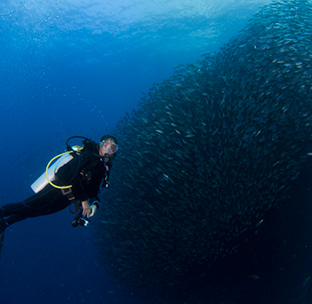
- A wall dive in a spectacular location. There are numerous dive sites all around Kicker Rock so that you can always find a place sheltered from the current. This makes it accessible to novices and advanced divers.
- Visibility varies from 12 to 20 meters.
- The predominant sea life includes pelagic fish, reef fish, turtles, sharks, and octopus.
Bartolome Island
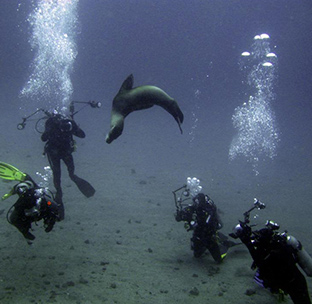
- A dive site at an offshore rock about three miles from Bartolomé Island. There are two distinct submarine topographies here. One is a nearly vertical stair-stepped wall; the other is a gently sloped platform.
- Sea conditions are variable here both due to the breezes and currents. Sometimes this can make for a challenging dive, but generally, the currents are moderate.
- Visibility may be 10 to 15 meters.
- The sea life is interesting for the richness of the creatures attached to the rocks, such as corals, sponges, anemones, gorgonians, bivalves, Christmas tree worms, etc. We also see reef fish and pelagic fish, sea lions, sea horses, eagle rays, schools of barracuda, turtles and more. After the dive, you can snorkel to observe penguins.
Puerto Egas (Santiago Island)
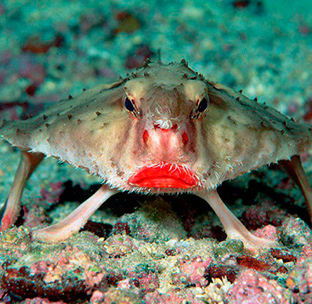
- Puerto Egas has its dive site on the northwest side of Santiago Island.
- The conditions are excellent for the complete beginner. The bottom is a shallow, irregular slope.
- Visibility is generally poor—from 8 to 12 meters.
- Animal life is primarily a great variety of species of reef fish, including many juveniles and Spanish mackerels, barracuda, and sea lions.
Espinoza Point (Fernandina Island)
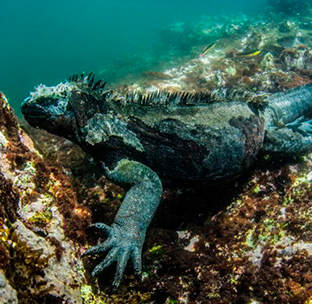
- Has easy diving, generally without current. The site is a boulder slope, not very steep.
- The visibility is only about 8 to 12 meters due to the quantity of nutrients in the water. The rich water supports a varied ecosystem and is part of what makes this area so interesting.
- Usual sea life may include reef fish and pelagic fish, turtles, seahorses, shrimp, and horn shark
Tortuga Island
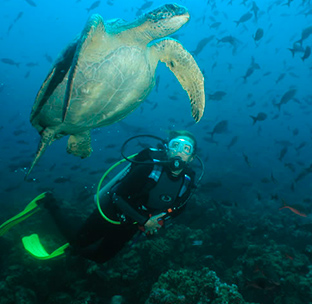
- This dive site is about 30 minutes from the ship’s anchorage. This is a high but small island with several possible dive sites making it accessible to beginner and advanced divers. The submarine topography includes vertical walls and shallow slopes according to the different sites.
- Surface conditions vary according to the winds and on which side of the island one is diving. Likewise, the currents may vary from wild to strong according to the location.
- Visibility may be around 12 to 20 meters.
- Wildlife is predominantly reef fish, also turtles, pelagic fish, rays, sharks, lobsters, and octopus.
Seymour Island
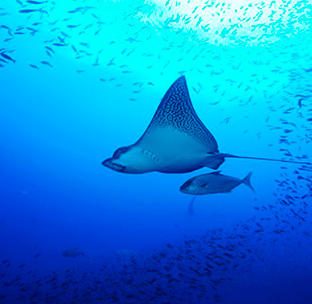
- These dive sites are in generally calm waters. The size of the island allows you to choose among sites so that all levels of experience can enjoy dives here. The bottom is varied boulder slopes.
- Sea conditions vary according to the location, and currents are generally moderate.
- Visibility may be 10 to 20 meters.
- The animal life includes reef fish, turtles, sea lions, sharks, rays, garden eels, and pelagic fish.
- Rocks and Sand.
- Normal current 30 – 100 Feet.
- Hammerhead Sharks, Manta Rays, White Tipped Sharks, Galapagos Sharks, Eagle Rays, Golden Rays, Green Turtles. Sea Lions. Fur Seals
Wolf Island
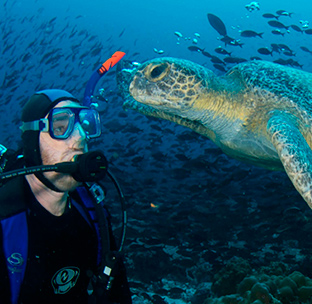
- The topography of this island is rocky.
- Sea currents generally run from 1 to 3 knots.
- Visibility may be 40 to 90 feet.
- Species usually seen include schooling scalloped hammerhead sharks, manta rays, Galapagos sharks, eagle rays, green turtles, sea lions, fur seals.
Darwin Island
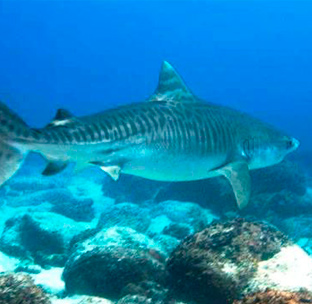
Best scuba diving site in Galapagos:
- Darwin Island topography is rocky.
- Sea currents are generally between 1 and 3 knots.
- Visibility may be 40 to 90 feet.
- Likely animal life include schooling scalloped hammerhead sharks, manta rays, Galapagos sharks, eagle rays, green turtles, hawksbill turtles, whale sharks
Academy Bay (Santa Cruz Island)
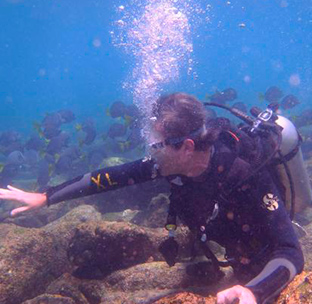
- This is an ideal site for introductory diving, checking immersions or immersions for beginning and intermediate divers.
- Each person dive at least one day in the Academy Bay area in order to get acclimated to the diving conditions of the Galapagos Islands.
- The beginning divers must make three immersions in this place before proceeding to sites further on.
- Permits diving with little current.
Punta Estrada
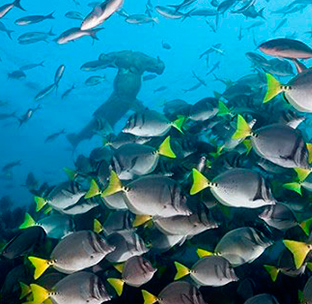
- Interesting geological formation of a sea turtle canyon.
- It is possible to see invertebrates, tropical fish, stingrays, sea turtles, and sometimes golden rays or some whitetip reef sharks
- Permits diving with little current.
Camaño Islet
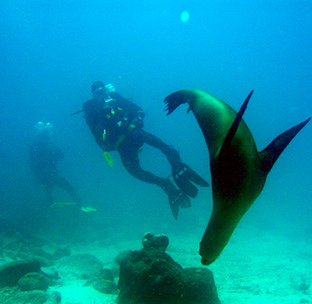
- There you have a unique opportunity to swim and play with friendly sea lions, many kinds of tropical fish and a few marine iguanas.
- Permits diving with little current.
Punta Nuñez
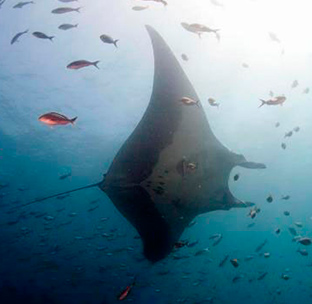
- Wall and cave diving. There are turtles, tropical fish, and stingray here.
- Permits diving with little current.
Bajo Solmar
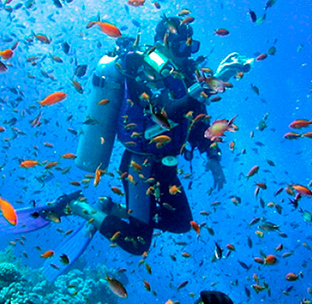
- This shoal in Academy Bay has an impressive number of fishes, whitetip sharks, morays, invertebrates, eagle rays, stingrays, turtles and sea fans.
- This is a good site for intermediate and advanced divers
Enderby Islet (Floreana Island), Champion Islet and Devil’s Crown (Punta Ayora)

- These are diving sites where we find sea lions, exotic fish, thousands of tropical fish, barracudas, black coral, whitetip and Galapagos sharks, moray eels, some hammerhead sharks and eagle rays.
- There is an excellent opportunity to see dolphins and snorkel with them. From the launch, it is possible to observe and enjoy the marine and land life of sea lions, blue-footed boobies, frigate birds, penguins and marine iguanas.
Santa Fe Island
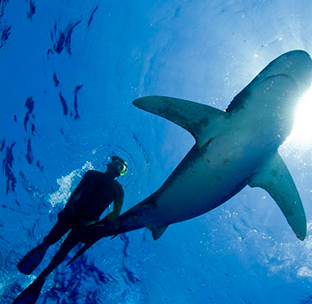
An easy diving site with little current. Whitetips, turtles, stingrays and sometimes pairs of hammerhead shark, and you can snorkel with sea lions.
Gordon Rocks
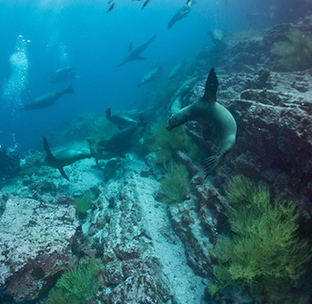
- Advanced divers site.
- For see turtles, large cold water fish, hundreds of tropical fish, hammerhead shark, Galapagos shark, whitetips, blacktips, large morays, eagle rays, golden rays, stingrays and fur seals.
Cousin Rocks
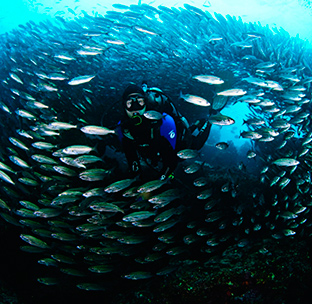
- This site for intermediate divers combines shoal diving.
- It is a wall diving among sea lions, thousands of fish, whitetip sharks, hammerhead sharks, eagle rays and manta rays.
- Invertebrates and black coral can be seen on an impressive vertical wall.
Mosquera Islet
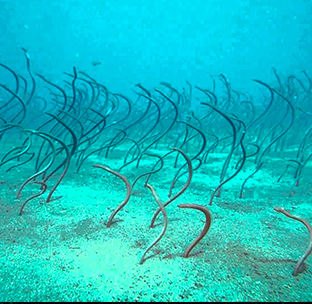
- Large schools of garden eels, manta rays, whitetips and sometimes hammerhead shark and eagle ray along with many tropical fish and sea lions.
- Daphne Islet Wall diving with morays, whitetips, eagle rays, stingrays, sea lions, invertebrates, hammerhead sharks, turtles, black coral and hundreds of fish.
Marine Wildlife
The Galapagos archipelago is peculiarly located at a converging point of major ocean currents. It brings a deep cool current from the western side, warm currents from the north, and nutrient-rich cold currents from the southern direction. The union of these ocean currents, fused with a unique flora and fauna from diverse environments, results in the creation of a remarkable marine world at these islands. Almost twenty percent of the marine wildlife Galapagos is considered endemic, which cannot be found anywhere else in the world. Such endemism is considered unique for marine species, which have a tendency to migrate and intermingle, in comparison to the terrestrial species.
Wildlife encounters
 The islands and its surrounding waters are one of the most exquisite ecosystems of the world. The Galapagos Marine Reserve is granted the status of ‘World Heritage Site’ by UNESCO and is considered world’s second largest marine reserve.
Galapagos’ biological and geological processes also help in the creation of wide-ranging habitats. Coastal areas boast of mangroves, rocky shores, vertical cliffs, rocky shores, sandy beaches, lagoons, coral reefs, and hypersaline panne habitats. Open ocean waters are home to a slew of pelagic fish while plateaus, submarine mountains, valleys, and ridges offer habitat to a variety of marine communities.
Galapagos Trips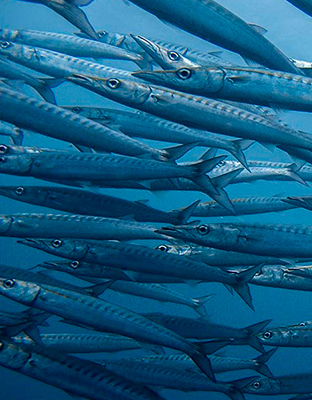
Water activities like diving and snorkeling are quite rewarding in these islands, which are also offered on majority of the cruises. The abundance of marine life is remarkable with schools of snappers encountered almost on any snorkeling outing. These islands are so peaceful that you can even hear the inshore grunts every time you visit them.
Diving trips to the remote islands of Darwin and Wolf are considered exceptional. On a lucky day, you can spot various exclusive underwater species. There are also natural history cruises, which would allow you to take a peep into life above the sea. These excursions include snorkeling trips to places such as Devil’s Crown, which provides a similar experience to swimming inside a tropical fish tank.
Galapagos fauna
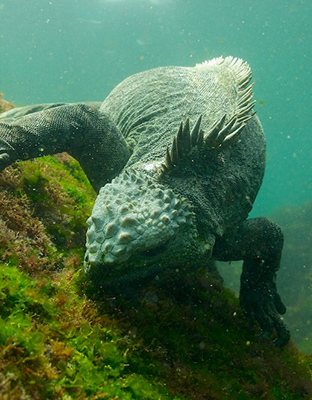 The Galapagos Islands are also home to the marine iguana and the rare northerly living penguin, which are found nowhere else in the world. Fur seals are found in waters that have coral beds. These islands are also home to pelagic species like Manta Rays, Yellowfin Tuna, Wahoo, and even the elusive whale shark and hammerhead sharks can also be seen roaming the deep.
The boulder-strewn floor of the sea and the drop-offs are also home to various striking and strange kinds of species like the Red-lipped Batfish, the Galapagos Clingfish, Rainbow Basslet, Pacific Seahorse, Galapagos Clingfish, and Rockmover Wrasse amongst a horde of others.
Galapagos Experience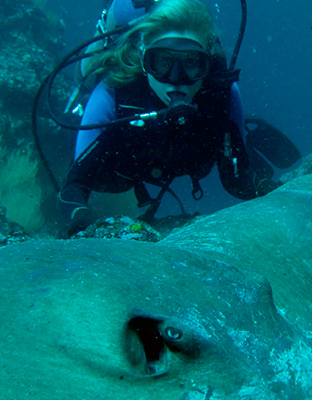
There is a great chance of viewing the whale sharks, especially in the northern and the central islands during the warm season. The chances to see these gentle giants reduce to about half in winters and you are more likely to see species like mobula, mantas, and eagle rays.
The Galapagos Marine Reserve is 133,000 square kilometers and was set up in 1998 to protect the waters around the Galapagos Islands and the many species of animals and fish that live there. Voyagers Travel offers travel planning services for divers and nondivers alike.
Vertebrates Life
Marine biology of the Galapagos ocean reserve: vertebrates
The isolated position of the Galapagos, nearly a thousand kilometers off the South American coast in the Pacific Ocean, has provided a unique habitat for the animal life and marine biology that evolved there.
As volcanic islands, the Galapagos were never connected to the mainland, which meant that all the animal life must have traveled there at some point. Many of species, including fish and sea lions, swam there and the rich bird life must have arrived from the sky. Some of the land animals may even have arrived on floating debris.
This unique collection of animals on the Galapagos Islands is therefore thought to be endemic. In essence, this means that it occurs in this one place alone and no other.
Due to the isolated geography of the Galapagos, life has also evolved in a very individual way, creating species that are uniquely adapted to life on this often harsh and unforgiving landscape, where fresh water and food are scarce.
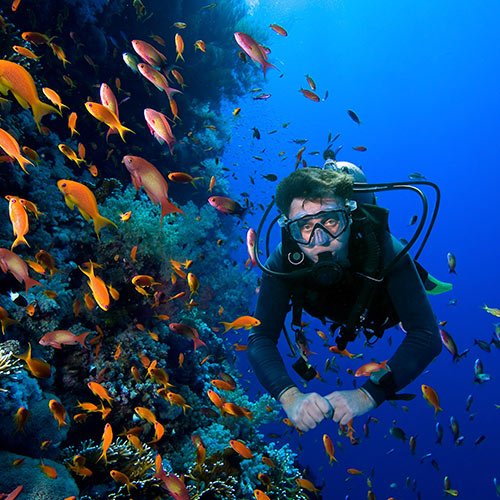 Conditions for marine life
The marine biology in the Galapagos is also varied and exceptional, although perhaps not as rich as that found in warmer tropical waters. Lovers of marine biology will find stunning reefs in the sub-tidal zones near Floreana, Bartholome Island, Champion Island, and Wolf and Darwin.
On a scuba diving trip you’re likely to spot manta, mobula and eagle rays as they congregate to mate in the warm season. The keen-eyed and fortunate might also glimpse the huge yet elusive whale sharks from May to December. Hammerhead sharks can also be found throughout the archipelago, all year round.
Of course, the marine biology of the Galapagos is not just limited to coral and fish life. There is an incredible selection of marine mammals and reptiles to observe too. Watch out for sea turtles, sea lions, penguins and even marine iguanas, which can be found year round.
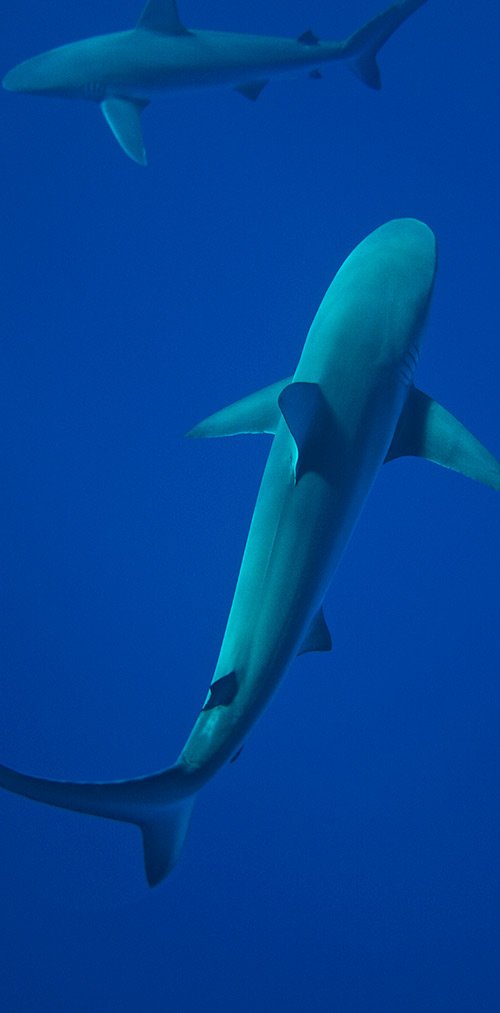 Galapagos shark and other fish species in the archipelago
If you’re planning a diving trip to the Galapagos Islands you’ll probably be well aware of the unique marine and animal life found there: the world within a world that has survived in this remote part of the planet.
However, aside from the iguanas, turtles and albatross that call the islands home, you’ll also find a host of species below the waves, with a unique habitat all of their own.
One such species is the Galapagos shark. Although not unique to the islands, it is most abundant in clear, reef environments surrounding oceanic islands, making the Galapagos the perfect place to spot them.
In fact, there are a staggering 300 species of fish found in Galapagos waters, 17% of which are endemic to the islands. So apart from the Galapagos shark you can also expect to see large schools of creole fish, barracudas, black striped salema and rainbow wrass.
Many of the species are hard to spot due to their habit of hiding between rocks and crevices to avoid predators.
For example the aptly named Galapagos barnacle blennies make their home inside old barnacles, and the sanguine frogfish artfully changes colour to match the sponges that he’s hiding between. Lurking in the black coral you may well see some Pacific seahorses, or maybe a red-lipped batfish lying in the sand on the seabed.
Other fascinating species include the juvenile giant damselfish with its iridescent blue spots, the huge manta ray that can grow up to seven meters long and the bulleye puffer fish, who is poisonous but thankfully easy to spot. From the smallest fantail pipefish to the biggest Galapagos shark, the seas around the islands are incredibly rich with life. So during your trip to this spectacular destination, make the time to get to know the locals who live under the waves.
Galapagos dolphin and other marine mammals spotted on tours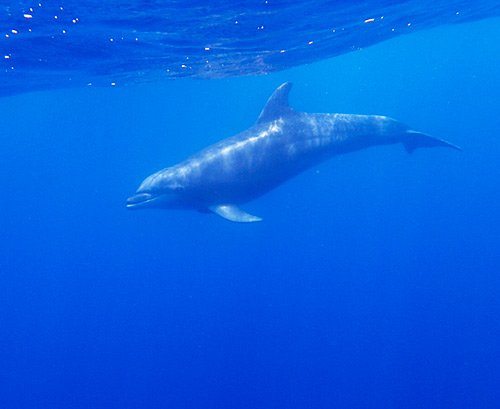
Distributed roughly on either side of the Equator and situated extreme left to South America in the eastern Pacific, the Galapagos Islands are home to exotic flora and fauna that are seen nowhere else. For many years, the Galapagos Islands have been calling tourists from various parts of the world to plunge into the euphoria by diving into the shallow waters of the Pacific, which are blessed with exotic marine life. It is not only the waters but also the land, which is abounded with various endemic species. The Galapagos dolphin is one fine example of the enigmatic species found here.
Marine mammals of the Galapagos: dolphin , whales , sea lions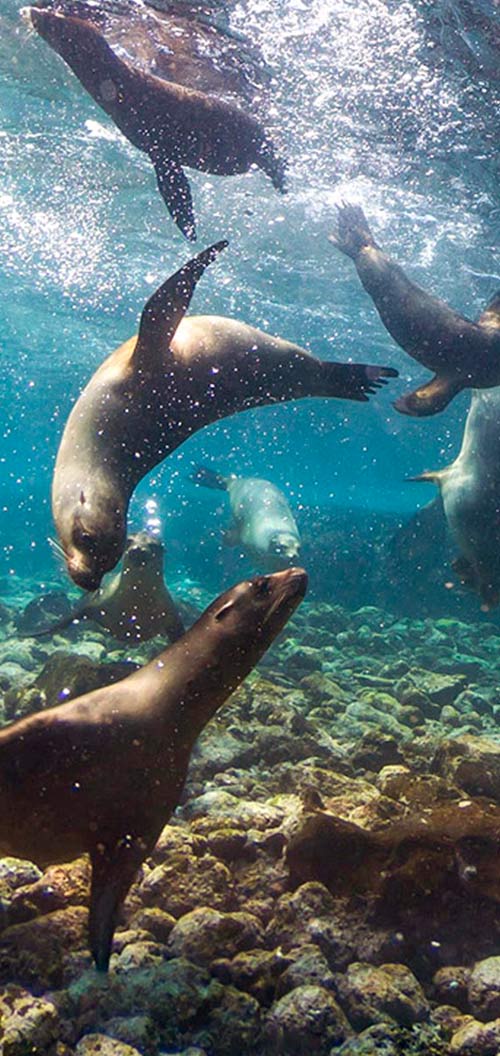
Ironically, there are fewer mammals on the islands than in the sea. The fact is obvious—mammals cannot sustain on the islands for long without water. However, the sea has a plethora of mammals. A number of tourists visit the place to enjoy scuba diving, to swim with sea lions, and to watch the lofty Galapagos dolphin hopping up and down.
You can catch a glimpse of a few mammals on the islands while you are in the middle of your hiking or you are visiting the Galapagos National Park. Some of the commonly observed species are the Galapagos rice rat, which can often be seen running into the burrows, and the Galapagos bat, which can be seen hovering in the sky in the evenings.
You can find the most extraordinary mammals in the sea, often in the middle of your snorkeling or scuba diving trips. The Galapagos sea lions are the largest of all mammals, which usually swim along the coasts or deep down the ocean. Another similar type of species you can come across is the Galapagos fur seal, which is usually smaller than the sea lion and is unique to the Galapagos. You can also find fur seals around the rocky coasts.
Several types of whales and dolphins can be seen basking in the surrounding waters. Humpback whales, residents of the South Pole, can be easily distinguished by their unique knobby head and humped back with white underbelly. There is the minke whale, which has distinct white patches on the flippers. And not to mention the Bryde’s whale, which usually approaches ships. There are two categories of dolphins found here: common dolphins and bottle-nosed dolphins. The former one travels in a large group of hundreds, while the latter is presumed to be a possible resident of the islands, as it can be easily recognized by its bottle-shaped nose.
This is just a descriptive note of what you can experience in the islands. There is a spine-tingling adventure awaiting you in the Pacific. Visit the Galapagos once and make sure you materialize these fantasies by experiencing this enigmatic world in all its charm and richness.
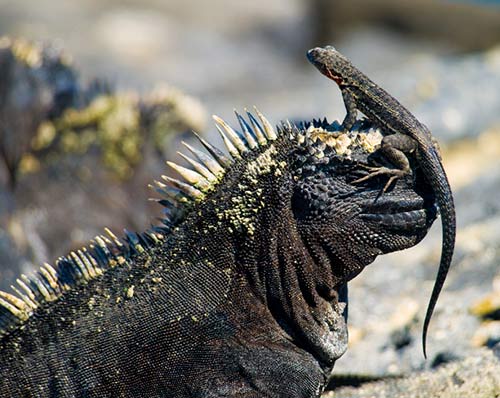 Iguana lizards and other reptiles of the Galapagos wildlife reserve
Although the Galapagos archipelago is famous for its birdlife and mammals, it is perhaps the reptiles that really give it its extraordinary reputation for wildlife. With so many unique and beautiful reptiles to see on the land and in the water around the islands, including the marine iguana and giant tortoise, it’s a great place to visit for any true nature lover.
Reptiles of the Galapagos include the Marine Iguana, Sea turtles and Giant tortoises
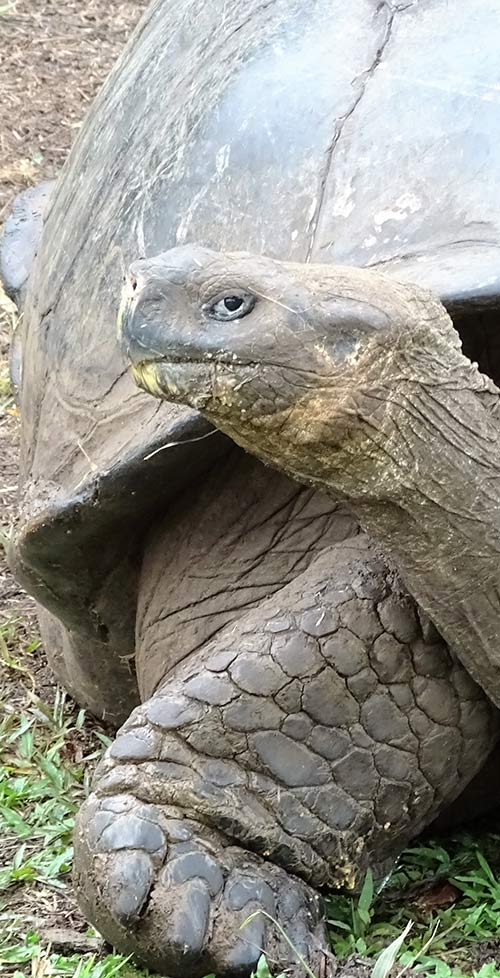 Giant tortoise
The giant tortoises of the Galapagos are completely unique to these special islands. Having evolved here in relative isolation, the eleven different species are identified by the different patterns on the shells. Some can live as long as 150 years and the largest can grow to a colossal 250 kg in weight.
Pacific green sea turtle
This beautiful species returns to the Galapagos to lay its eggs. Its one of nature’s great mysteries how the females manage to not only locate the islands but find their way to the same specific beach each time. With laying season being towards the end of the year, it’s a great time to visit. Scuba divers can encounter Sea turtles up close.
Marine iguana
These powerful swimmers live on the islands but spend a lot of time in the water diving for food, reaching depths of up to 35 feet. Usually black to disguise themselves against the volcanic rocks, the male iguana can turn red and even clear green to attract females.
Land iguana
This endangered, yellow reptile feeds on cactus fruits and can be found on the land and beach areas of a number of the Galapagos islands.
Lava lizard
These colorful creatures are always popular with visitors, ranging from black through to red and orange. The females have a distinctive brown color with a bold orange stripe. The seven different species can be found on all the islands in the chain.
The Galapagos Islands birds found on a diving tour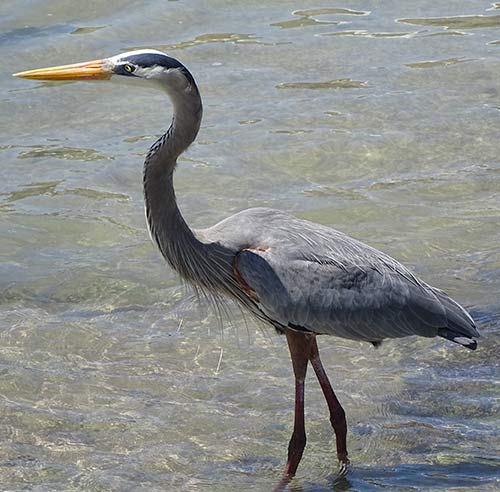
Charles Darwin didn’t sound whimsical at all in his famous book “On the Origin of Species by Means of Natural Selection” or “The Preservation of Favoured Races in the Struggle for Life (1859).” His theory was not a speculation but a result of thorough research conducted solely on the Galapagos soil. And amusingly, it was the diverse variety of birds that allegedly inspired him. The Galapagos birds are known for their adaptation to the environment and for their inexplicable charm.
Birdlife of the Galapagos Islands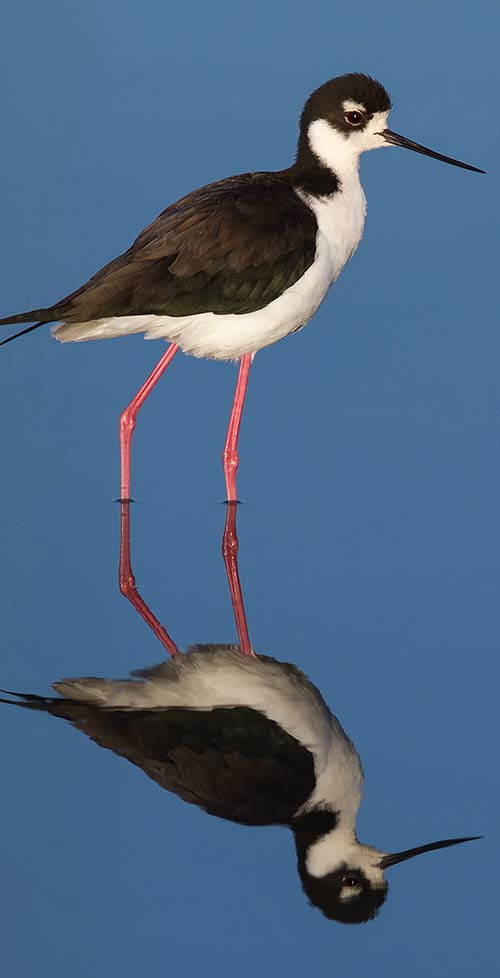
On your visit to the Galapagos, watch out for birds—land birds and seabirds—which are often seen soaring in the sky. There are 169 species of birds in total, with 26 endemic ones. Even if you are not a bird-watcher, you won’t be able to resist the one-of-a-kind birds that have lived in the archipelago for times unknown. Though there are other non-endemic species too, the endemic ones bear a special enigma.
Among the flightless birds, the extraordinarily remarkable Galapagos Penguin is the rarest species of penguins found on the equator. The best place to catch a glimpse of these penguins is deep down the waters while you snorkel. Flightless Cormorant is another endemic species of flightless birds that cannot fly. However, they know how to swim and dive into the water to catch their prey.
Then there are of course the Darwin’s Flinches, which had inspired Darwin to add a crucial statement in his theory of evolution. According to Darwin, a number of finches with varying beaks are the descendants of the same kind of finch. There are 13 species of finches in total, which can be found in the highlands of Santa Maria. The Galapagos boobies are also residents of the islands; these birds are known for their art of catching fish. They plunge headlong into the ocean from a considerable height and clamp the fish in their beaks when they descend. There are three varieties of boobies found here: red-footed, Blue-footed, and masked.
Waved Albatross is the largest bird on the islands, and an interesting fact about this bird is it can sustain in the sea for years without moving to the land during unfavorable conditions. You cannot take your eyes off the kaleidoscopic Galapagos dove, a one-of-a-kind bird confined to the archipelago. It is merely eight inches long. The Galapagos hawk is another endemic bird that usually breeds on the islands. Having dark brown body and yellow feet, it is distinguished by its broader wings among similar-sized seabirds.
Apart from the endemic birds, there are other resident birds as well. Come over to the Galapagos to discover the charm, behavior, and characteristics of these birds.
Although the purpose of your trip may be to explore the underwater wonders of this spectacular marine reserve, many bird species can be observed during a Scuba diving trip of the Galapagos.
Invertebrate Life
Galapagos marine wildlife: Underwater invertebrate species of the archipelago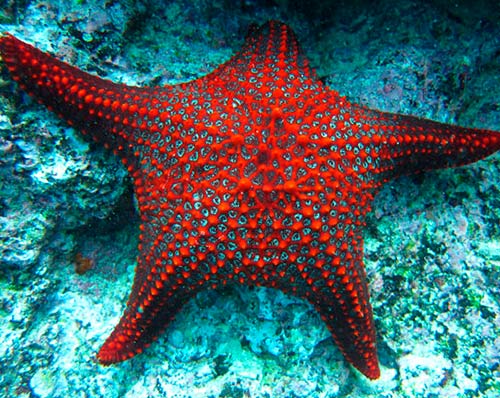
The Galapagos Islands are well-known for their lush marine reserve. Situated in the Pacific Ocean, these beautiful islands are rightly titled as the ‘living museum’ and the ‘showcase of revolution’. These islands are one of the richest marine ecosystems in the world, mainly because they are situated at the convergence of three ocean currents. The Galapagos Islands were formed as a result of seismic and volcanic activities. Various unusual species of flora and fauna such as flightless cormorants, marine iguanas, giant tortoises, and a range of endemic trees are found at these isolated islands.
Invertebrates of the Galapagos marine reserve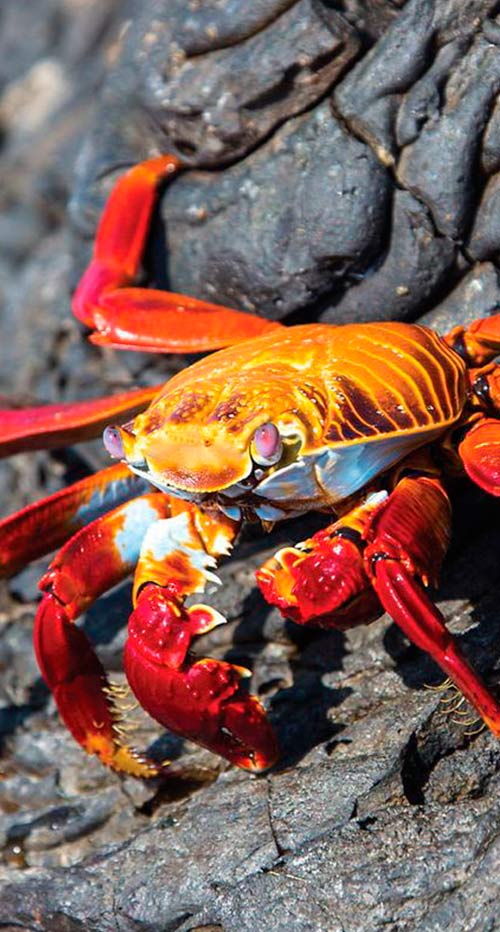
24 species of sea urchins, 28 of sea stars, 30 of sea cucumbers, approximately 600 of mollusca, and more than 100 of crabs exist in the Galapagos. The colors of the Blue Sea Star Phataria Unifascialis, the shape of the Black Spiny Brittle Star Ophiocoma aethiops, the red phosphorescent skin of the Horse conch Fasciolaria Princeps and the quantity of Slate Pencil Urchins Eucidaris thouarsii will fascinate you during the dives.
The Galapagos marine wildlife is also rich in corals, sharks, penguins and a variety of aquatic mammals. There isn’t any other site in the world that gives you an experience of witnessing so many diverse life forms altogether. Even the varied geomorphologic forms add a great value to the site, producing a unique display overall. The waters are pristine and the marine life is colorful with exotic species like sea cucumbers, sea urchins, coral, sea turtles, rays, sharks, diving boobies, and sea lions found in abundance.
One of the most intriguing components of the Galapagos Islands is its marine ecosystem. The marine iguanas along with sea critters are also commonly seen. The Sally Lightfoot crabs with their bright orange and red hues are often spotted at the black lava rocks along the shores. Another rare species of Galapagos underwater is the black spiny star. The shiny red skin of the Horse conch captivates the eyes of the visitors. The slate pencil urchin has vertical rows of blunt spines, which are purplish brown in color. The urchins are usually found in crevices of shallow reefs that are exposed to violent ocean surge. The book ’A Field Guide to sea stars and other Echinoderms of Galapagos’ is a highly recommended book for all those, who want to explore more about the marine invertebrates found at the Galapagos Islands.
Corals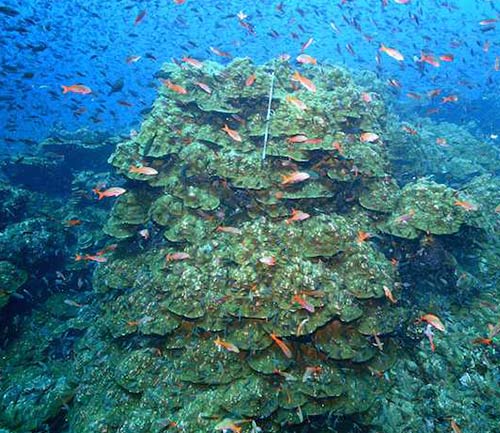
31 non-reef building corals (30% of them are endemic) and 13 reef builders are reported. The Galápagos have the same quantity and diversity of corals as other parts of the east Pacific. They are congregated in some areas, especially in Darwin and Wolf where more warm waters are present. Out of those congregations, you should not expect to find large quantities of corals.
Diving Courses
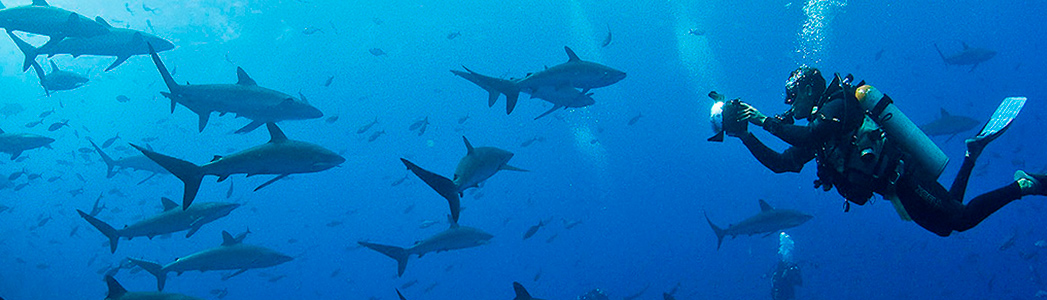
Diving is a popular water sport amongst the adventure seekers of all the age groups. The rich diversity of the Galapagos Islands and its exotic marine life makes it an ideal place to learn and hone your diving skills. It is vital that you get trained through the Galapagos diving courses before starting it, as the waters here are mostly suited for the advanced divers only. If you learn the fundamentals of diving precisely and practice them correctly then it is a very safe sport to pursue. Diving is a sport where perfection is attained only after passing its various levels or stages.
Diving courses in the Galapagos Islands
Galapagos diving courses
Beginner stage:
Divers at the beginner stage are most of the times newly certified, and they should have performed 3 to 15 dives.
Intermediate stage:
The intermediate divers should have done 15 to 50 dives in cold water with an excellent experience in wall and drift diving.
Advanced stage:
The advanced divers should have performed 100 dives or more in cold water with wall and drift diving experience.
In the Galapagos, full-time certification courses are available for both novice and experienced divers. These courses will equip you with all the necessary factors that will be required for a perfect diving experience. The various Galapagos diving courses offered are:
Open water course:
This is the fundamental diving course where you will be learning the techniques of movement, balance, breathing, and buoyancy. It will also provide information about the kind of wildlife to look for while performing the diving. During the course, there will be dive boats, dive instructors, pool sessions and theory classes with PADI certification.
Advanced open water course:
In this course, you will get the opportunity to become a certified diver with improved diving techniques in just two to three days. The course comprises of compulsory diving with an underwater naturalist.
Rescue diver course:
The rescue diver course is a certification course that helps you to enhance your diving knowledge, responsiveness, productivity and confidence before actually embarking diving. As a part of the course, the diver is supposed to spend three days on surface and underwater for rescue diving.
Dive master course:
This course mainly concentrates on improving the expertise and diving knowledge of a diver. The theory in the course includes chemistry, physics, physiology, environment, and information about diving equipment. This course is aimed at perfecting your diving skills that would make you a diving professional within a month.
Instructor course:
This course teaches diving candidates the techniques for performing this adventure sport at an instructor level. Here the main task is to upgrade the knowledge and skills of an already experienced aquarist. In this course, the person is provided tutoring in physiology, physics, equipment, and environment. It gives more importance to rescue techniques and safety.
Medic first and CPR course:
This special course deals with the first aid and CPR techniques that need to followed while diving. It also provides intensive training on how to combat emergency situations while performing the sport. It is highly recommended for both divers and non-divers.
All the courses listed above have a sole objective of providing you a safe and enjoyable diving experience simultaneously in the enchanting islands of Galapagos.
Diving Tours
Travel planning options liveaboard cruises and dive resorts
The Galapagos Islands, which are located on Ecuador’s west coast in South America, are often branded as a paradise for adventure sports, especially scuba diving. Unveiling a lot of opportunities for the adventure buffs, the under waters of the Galapagos Islands are as thrilling and stimulating as their ashore. Divers enjoy the sight of these islands, which share waters with marine iguanas, sea lions, angel fish, penguins, sea turtles and various other exotic species like hammerhead sharks. There are many Galapagos diving tours, which allow you to experience and savor the wonderful marine world.
Diving Tours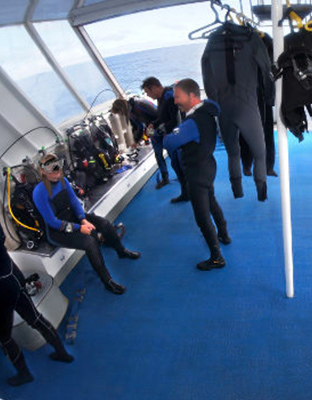
There are two options available for scuba diving in these islands. The first and the most popular way is by boarding a liveaboard dive yacht, but one needs to be careful while selecting the yacht because not every yacht offers scuba diving. It is advisable to inform your cruise operator well before the time that you are interested in scuba diving.
Another option for diving in the Galapagos is through the land-based dive tours.
Divers halt at hotels in the night while indulging in dive excursions during the day. People can select a range of options for the number of islands they would like to visit. They can also choose the number of days they want to perform scuba diving
You can discover the Galapagos’ underwater world while staying in any one of its islands.  There are multiple options available for taking dive tours and land excursions. Diving only tours are also offered to the visitors.
A diving itinerary comprises of two to three dives per day as well as land visits in the islands. There can be four dives in a day or even night dives, depending on the conditions, at dive sites like in the northernmost islands of Darwin and Wolf or in Roca Redonda. All dive trips are mostly taken in Darwin and Wolf Islands, which are undeniably the two of the finest sites for diving in this world. At the Galapagos, the diving enthusiasts are guaranteed to be taken to the premium dive sites with the most experienced dive masters that really know the difference between an exceptional and a good dive.
All these elements make the Galapagos diving a truly remarkable one, treasured by those blessed enough to be a part of it.
Dive Conditions
Sharks and other marine wildlife set the excellent dive conditions in Galapagos
The land animals of the Galapagos have brought the islands worldwide fame. However, the waters around the islands are teeming with life that is just as unique. Which is why the Galapagos Islands are considered one of the world’s premier diving sites.
Conditions for diving with Penguins, whale sharks and other Pelagics
As well as the famous endemic tortoises, you can also explore waters filled with playful sea 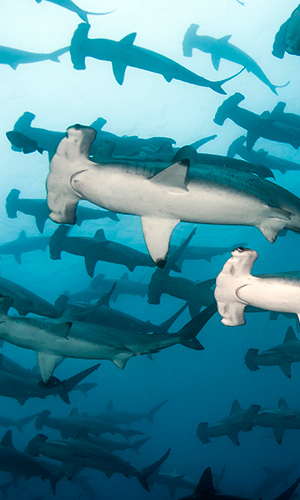 lions, whales, penguins and sharks. The dive conditions around the islands do vary according to depth, temperatures and plant life in the water. Because of this, conditions are rated as somewhere between medium and hard, but for more experienced divers this is the kind of challenge they relish.
Due to cooler Pacific currents, the dive temperatures vary between 18˚C and 30˚C, making the archipelago cool but definitely not arctic. The waters here are often cooler than many people expect given its equatorial position but are still suitable for diving.
The aforementioned Pacific current, known as the Humboldt, means currents are usually medium to strong, making previous diving experience necessary.
Crucial for safe diving, the visibility is usually around 30 meters or 100 feet. All dives will be between 15 and 25 meters, which again means previous experience will be necessary. With sharks and whales around, visibility is important.
Divers can usually make two to four dives a day depending on conditions. More dives and sightings of sharks and rays can be achieved on liveaboard tours or cruises that last several days.
Due to many of the conditions, the diving in the Galapagos is better suited to those with experience. However, there are some dive sites that are ideal for beginners. Generally, those looking to glimpse the prestige animals like sharks and whales are advised to gain experience before touring the Galapagos.
Temperature, currents & visibility

Temperatures
Ocean temperatures that affect scuba diving in the Galapagos oceanic reserve
- The range of surface temperature of the sea is from 18ºC to 30ºC.
- September to November are the coldest months.
- February to April the warmest.
- Thermoclines are present, between 10 to 30 meters depth ( 30 to 100 feet)
- The temperature can drop from one to five degrees Celsius.
- Water temperatures are warmest (22-28c) from January through April and coolest (16-22c) July through October.
| Sea Temperatures | ||
| December to May (Warm Season) |
Central Islands | 75-78° F / 24-25.5° C |
| Wolf & Darwin | 76-80° F / 24.5-26.5° C | |
| June to November (Cool Season) |
Central Islands | 65-72° F / 18.5-22° C |
| Wolf & Darwin | 74-78° F / 23-25.5° C | |
Diving immersions
Scuba diving in Galapagos average number and length of dive immersions
If you are looking for a perfect vacation destination to explore the underwater world, then the Galapagos Island is one of the best choices you can make. These magnificent islands are situated a 1000 km away from the southernmost part of the American continent, in the Pacific Ocean. The Galapagos is well known among the water sports lovers as it provides various bewitching sites for diving and snorkeling. The marine life of the Galapagos is full of abundant species of fishes and other water animals. The best feature about the Islands is that it is free from any commercial fishing culture.
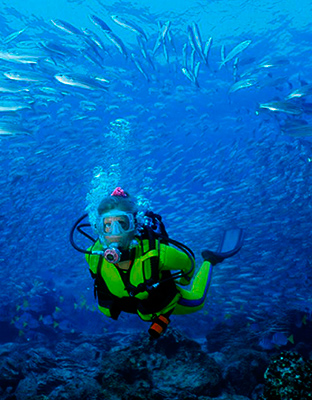
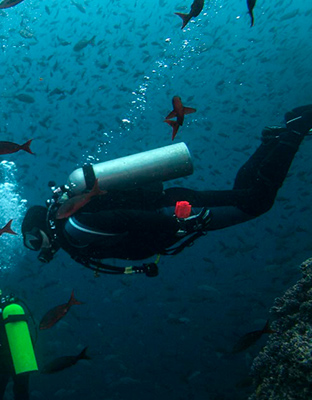
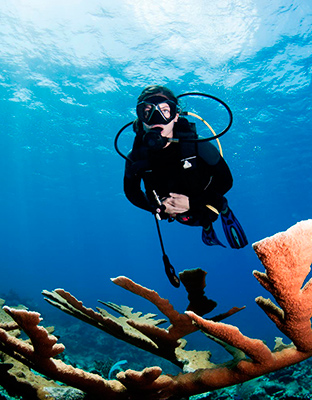
Length and Number of immersions when scuba diving in Galapagos
A water sports lover can enjoy many aspects of the archipelago’s water adventures, but the Scuba diving in the Galapagos is the top experience that can be enjoyed and brings all the hype to this wonderful marine reserve. The marine habitat of the Galapagos Islands is all crystal clear and pristine. Earth’s most remarkable and surprising sea life can be spotted here. It is said that the abundant water areas hold in nearly 500 species of fishes and other sea creatures. Since the Islands are free from the sin of commercial fishing, the species found here are in safe hands.
People, who want to enjoy the diving as beginners, stand a really scarce chance to be permitted to enjoy the diving. The diving is allowed only to those visitors who have an advanced or mid-level experience in the scuba diving. The diving is permitted only under the supervision of the expert trainers and tour guides. There are also some specific agencies that provide all equipment and trainers to make your Scuba Diving in the Galapagos an unforgettable experience. The visitors can also opt for less taxing itineraries, especially for novices. Before diving, all the conditions like depth, shape and the sea currents are measured carefully to prevent any loss. The marine animals and the temperature of the particular place also affect the diving possibilities.
The temperature on the surface of the Galapagos ranges from 18ºC – 30ºC. The time from February-April is considered as the best time for diving, which is considered the warmest time. A person can enjoy 2 to 4 dives per day but it depends on several other factors as well. Some of the itineraries also provide the diving facilities during the night. People opting to dive at night need to be extra careful and well equipped along with some companion to keep a watch on them to ensure safety.
Dive travelers should focus mainly on the northern Islands, while the southern islands, as the most popular itineraries, include more land tours and snorkeling, with less interesting sites for passengers to dive. Divers can also choose for itineraries that provide tours to Darwin and Wolf Islands as they are considered as the best diving spots in the whole Galapagos archipelago. But be careful while choosing for itineraries as these islands are 14-20 hours away from the main islands.
Diving Experience

The scuba diving experience in the Galapagos as seen on IMAX
Bursting at the seams with hammerheads, sea lions, eagle rays, golden rays, sting rays, invertebrates, garden eels, morays, pelagic fish, turtles, and whales, the Galapagos Islands are seen as a perfect dive destination for travelers anywhere across the world. It is seen as one of the finest scuba diving sites of the world, bagging the top-most spots in Scuba Diving’s Top 100, in categories like “Healthiest Marine Environment” and “Best Overall Diving”.
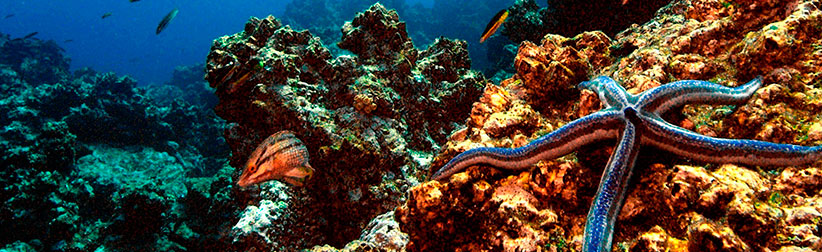
You can also get a peep into the amazing realms of the islands with the film, Galapagos IMAX, presented by Smithsonian Institution and IMAX Ltd. It delves deeper into the unknown waters around this living natural laboratory to discover its natural wonders.
Situated at the precise intersection of multiple ocean currents, the Galapagos Islands boast of an astounding range of marine life of which 20 percent is endemic. The splendid display of the marine life, comprising of sea lions, baleen whales, and about 450 species of fishes, is due to the nutrient-rich currents of the ocean and its volcanic origin.
The 13 primary islands of Galapagos showcase the second largest of a marine reserve in the entire world. Scuba diving in the flowing waters allows you the opportunity to view green turtles, manta rays, and whale sharks, all in one descent. The exquisite biodiversity and underwater encounters make these islands, the sure-shot winner for diving. The continual environmental preservation efforts by the Government also contribute to the marine environment.
Divers have a whale of a time while diving in these waters. Beginner divers should take proper caution.
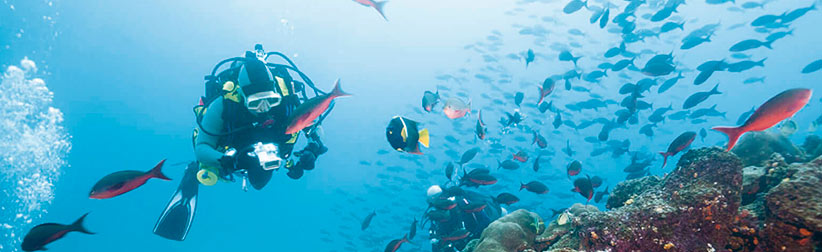
Some of the finest dive sites
Isabela Island
This largest Galapagos Island is an amalgamation of six big volcanoes and is also home to the third largest town, Puerto Villamil. One can also view Galapagos penguins here, north side of the equator.
Darwin Island
There are sea lions, fur seals, hammerhead’s, and even whale sharks that can be found on this small island. The island may be tiny, but has some of the finest diving in the islands.
Cousin’s Rock
Is on the northeast of the central islands showcases steep dropoffs and sloping rock plates. Divers will find the glimpse of Galapagos black coral as well as seahorse, octopus, elusive frogfish, or nudibranch, hidden inside the coral branches.
Santa Cruz Island
It is the place where one will find the popular Charles Darwin Research Station and Puerto Ayora. Land-based diving is easy; however, short boat rides are needed to reach some of the finest sites.
Fernandina Island
The island on the western most side of Galapagos is relatively young as it was formed after its eruption in the year, 2005. The Fernandina Island is also home to marine iguanas that assemble on lava rocks to take in some sunlight before the next dive.
San Cristobal Island
This was the first of the islands that Charles Darwin paid a visit on his excursions. The second most in terms of population, this island is also home to Puerto Baquerizo Moreno’s capital. Diving is considered exceptional here. In the Galapagos, there are dive sites for all levels of diving experienced-beginners, intermediate and advanced.
- A few vessels offer courses for diving, or this can be arranged through hotel/day tour packages.
- However, in general, the diving in the Galapagos is for intermediate to advanced divers, and the best dives sites are usually the most difficult ones.
- Most dives are drifts along the cliff faces, off-shore rocks, and pinnacles; additionally, strong currents, sea swells, surges, upwelling, large animals and difficult entry onto/exit from the dive boats (usually zodiacs) contribute to the reason why divers will feel more comfortable in the Galapagos if they are more experienced.
- Each vessel has its own set of regulations for determining experience level, which usually correspond to the following rough guide: Beginners – Newly certified divers or divers with fewer than 15 to 30 dives.
Intermediate – Between 15 or 30 dives and 99 dives logged with experience in cold water and with drift and wall diving.
Advanced – 100 or more dives logged with experience in cold water and with drift and wall diving.
However, these guidelines are general and a detailed description of dive experience may be required in order to confirm a dive itinerary.
- A diver with 10 dives in cold water and currents may feel more comfortable than a diver with 40 logged dives in warm water and little current. Also, a newly certified diver may feel more comfortable than a diver with 50 logged dives but who has not been diving for several years.
- Some vessels require a minimum of 25 dives before diving in the Galapagos.
- Some vessels allow divers as young as 12 years old.
Guides & Dive Masters.
Due to Galapagos National Park rules, a Naturalist Guide / Dive Master will be in the water with the divers during all dives–just as visitors must be accompanied by a Naturalist Guide on land. This Naturalist Guide is also a dive master and sometimes there is a separate dive master who accompanies the group and is responsible for directing and controlling the group.
Diving types
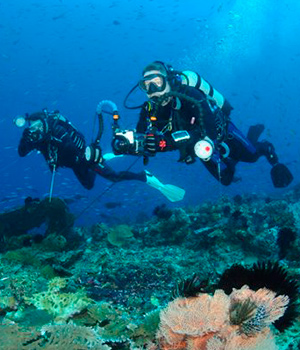 Drift Dives
- Many dives in the Galapagos are drift dives.
- The group will enter and will be drifted down current.
- With medium currents, you should not wait more than a few seconds at the surface before descending, so you don´t drift from the group.
- During your dive, the boat will follow the bubbles and will pick you up in the place you appear at the surface.
- Safety stops are often made in blue waters, away from a wall or bottom.
- Keep with your buddy and the group.
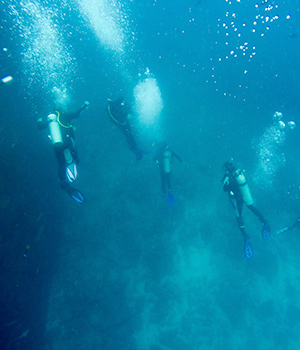 Deep Dives
- More than 20 meters or 60 feet is considered a deep dive.
- We make the deep dive first in the morning.
- Consider the possible thermocline and expect temperatures to be cold, use sufficient thermal protection.
- Often dives in the Galápagos are deep and wall dives.
Night Dives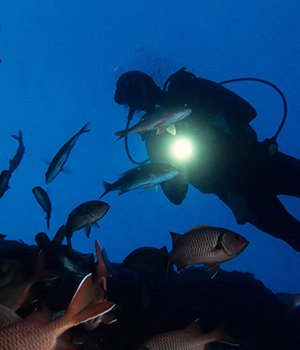
- You will enjoy diving in Galapagos a shallow night dive with no drift.
- Your guide will select a safe place for the night dive with no current.
- Nocturnal crabs, starfish, sea cucumbers, fish, and other different species are visible at night, and it is common to find fluorescence in the first six meters.
- One of the best dives can be a fluorescent night dive with turtles, fur seals and other animals which can be seen with the lamp turned off.
Diving rules
Scuba diving in the Galapagos: rules and regulations
Consistently being voted as one of the finest dive spots, the Galapagos Islands are a delight for all the water and adventure lovers. Scuba diving in the Galapagos is like a dream come true for more than one reason. The Galapagos is amongst those island chains in the world that are absolutely free of commercial fishing. These islands also boast of a pristine and clean marine habitat, which is full of a remarkable range of sea-life. It is estimated that around 500 different species of fishes are present in these waters.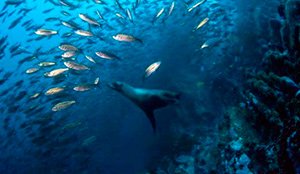
Scuba diving in these islands is not recommended for the beginners. These islands are especially suitable for mid-level and advanced to expert divers in certain areas.
One can rely on the valuable advice of the tour guides, or of various dive shops regarding the conditions at that particular time in these islands. These people can also suggest less taxing itineraries for novices.
The diving conditions are deemed easy or tough after examining the depth, shape, and 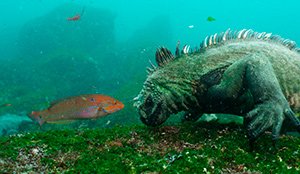 currents of the dive sites.
The conditions also depend on the fauna and temperature at these islands. The surface temperature in Galapagos varies from 18ºC to 30ºC, and divers should take proper care of that. While the time from February to April is the warmest, the months from September to November are considered as the coldest. Thermoclines are there in the waters at around 30 to 100 feet, and the temperature can plummet down from one to almost five degrees Celsius. Divers can buy appropriate gears and wetsuits to ensure thermal protection as per the temperature.
You can dive in medium to strong currents in the Galapagos Islands. While the medium currents are between 2 and 6 km. /hour or 1 and 4 miles/hour, the strong currents are not more than 6 km. /hour or 4 miles/hour. The Humboldt Current arrives from the southeast during the months from July to December and the Panama Current arrives all the way from northeast here. Diving can be risky if a diver is caught in an unanticipated current on the surface. In such conditions, one is recommended to maintain positive buoyancy and also signal their boat.
Many of the dives in these islands are drift dives where the divers enter to be drifted down the current. At the surface, one is only required to wait for a few seconds before descending, so as not to drift away from their group. The maximum depth is 30 meters or 100 feet for any dive.
The divers should make the deepest dive (more than 60 feet or 20 meters) in the morning and shallow dives without drift in the night. One should avoid performing decompression dives. The boat or the cruise ship will follow the bubbles to pick up the diver from the place where he emerges out at the surface. It is advisable to make a safety stop after every dive.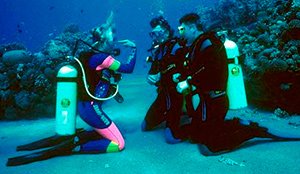
There are certain other rules that divers need to follow for a lifelong experience. It is recommended that the diver should not disturb the plants or animals, as they can be stung or bitten. Avoid collecting anything from the waters and only remove the rubbish. Ensure that you are under the vigil of the boat driver, guide or some other person while driving.
In summary:
- Follow your guide’s instructions.
- Never do decompression dives.
- The maximum depth of any dive is 100 feet or 30 meters.
- Make a safety stop after every dive. Three minutes at 5 meters or 15 feet.
- Make the deepest dive first and don’t make repetitive deep dives.
- You should finish your dive with 500 p.s.i. or 40 bars of air in your tank.
- If you lose the group, search for them for a minute and if it is not possible to locate them, resurface.
- Never leave an unattended tank on the deck.
- Always dive with your buddy.
- Don’t touch or disturb the animals or plants, you can be bitten or stung.
- Don’t collect anything from the oceans, only remove the rubbish.
- Don’t go outside of the diving or snorkeling area specified by your guide.
- Keep yourself safe of nitrogen; don’t go to the limits of the diving tables or computer.
- Never attempt to snorkel or dive if you are not sure that you can manage the situation.
- Be sure that your guide, the boat driver, or another person is supervising you at all times.
- If a problem arises on the surface, be calm and maintain positive buoyancy.
- If you are caught in a current, don’t fight against it. It is better to relax, float, and make signals to the boat
Equipment Rentals
Galapagos Islands tour operators rent diving equipment
There is a mystique world down under the serene blue sea lying around the Galapagos archipelago. From reef fish to sea lions, sting rays to garden eels, sea turtles to hammerheads and not to mention… the whale shark!, Galapagos Scuba diving allows you to catch a glimpse of an enigmatic universe buried deep below the sea.
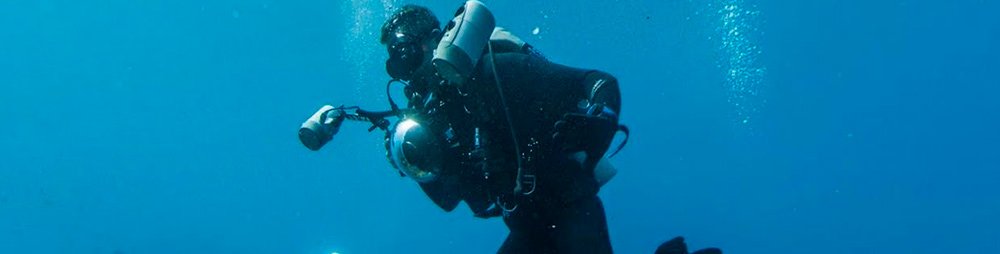
Scuba Equipment Rentals in Galapagos
Not just the best place to enjoy close wildlife encounters on land, but the Galapagos islands are also a great marine hub. Divers from across the world visit the island just to dive into the sea and take pleasures in the marine action that unfolds in this corner of the Pacific.
And if you are fervent enough to plunge into it, your immediate prerequisites are Scuba Diving Equipments. The best time to enjoy the mystique view deep down the ocean is between May and November, although they are not the warmest months.
However, if you are a frequent diver, you can explore the marine life throughout the year, especially during September-November, feeling the thrilling ocean chills if you love to, but encounter the most active marine life.
There is no need to worry about the appropriate gear as you will find wetsuits and other equipment as per the climate requirements. Though you can bring your own set of equipment if you can afford, the better option will be renting a part or all of them if you cannot manage to bring along those diving essentials. Equipment rentals are quite affordable and you can find them in all ranges in the port towns of Puerto Ayora lying on Santa Cruz island and Puerto Baquiero on San Cristobal.
Shops sell and rent equipment as a complete set or individual items. Diving down in the deep waters of Pacific can be exhilarating, however, there are some diving essentials you cannot do without. Apart from mask and fins, booties and a wetsuit. The thickness of the wetsuit highly depends on the season, however usually it ranges from 4-7mm.
Then there is the requirement of Buoyancy Control Device that regulates your flow and regulator with octopus and pressure gauge. Also, if you are on a liveaboard dive trip, you cannot do without a dive computer, you know that quite well. However, if you don’t have a diving computer, you will need a depth gauge. Last but not the least, dive belts with weights, aluminum air tanks, and emergency dive sausages are also required.
In the marine reserve, you cannot explore the sea alone. You need some assistance be it by diving in a group or in a private tour, you must be in the company of a National Park certified guide and be part of an organized departure, you can bank on various Galapagos islands tour operators. They organize various types of diving trips making you cover the best regions which you could hardly explore on your own. A whole lot of them offer the diving equipment and thus you can save your necks off ludicrous rental costs.
Daving Safety
Galapagos scuba diving tips for staying safe
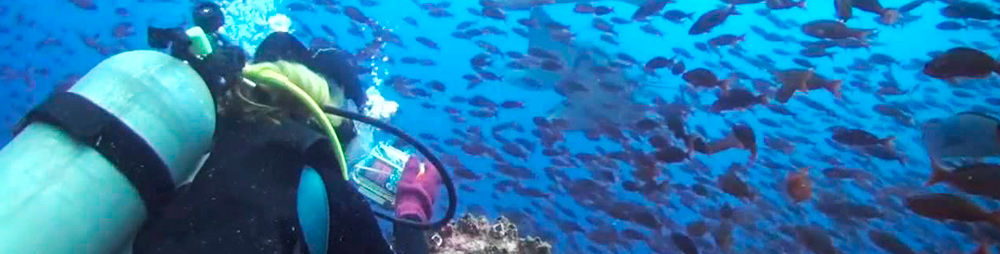
The Galapagos Islands have always won accolades for being one of the top spots for diving. The islands unravel an exotic underwater diving experience for those who desire to swim in the cool waters of the Pacific Ocean. The waters surrounding the archipelago of the Galapagos have been declared as a marine reserve and a whale sanctuary. Because of its rich marine life this paradise has also been titled as one of the seven underwater wonders of the world.
Safety Indications for diving in the Galapagos archipelago
Diving along with the sea lions and turtles, watching the rays and eels, and playing with the 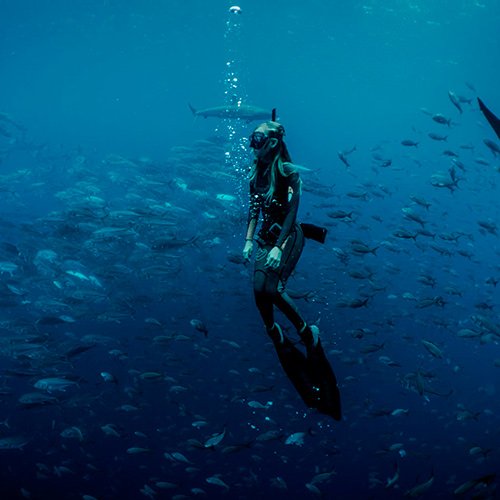 shoal of fishes are perhaps a rare chance, which you will only get in the Galapagos.
The scuba diving in the Galapagos is recommended for all the advanced divers, as the underwater conditions in the Galapagos are near perfect. The ideal time for diving in the waters of Galapagos is during the months between April and June or in December.
Changing depths, currents, surges, temperature, and contour of the dive sites are responsible for the inconsistent water conditions.
The surface temperature of the sea ranges from 18 degree Celsius to 30 degree Celsius. Between 10 to 30 meters depth underwater, there are regions called thermoclines where there is a possibility of temperature dripping by four to five degree Celsius. Divers in the Galapagos have to be cautious of the thermoclines, as this may badly affect their visibility while diving.
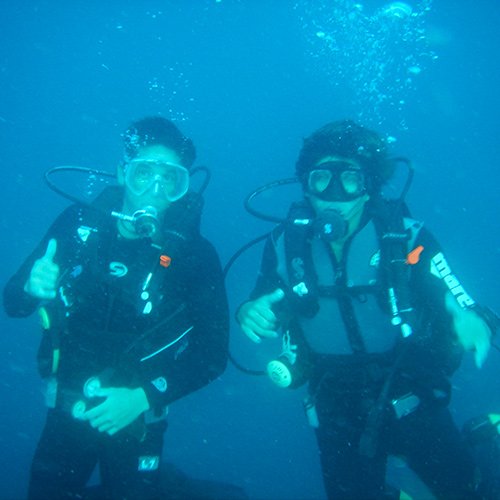 Areas, where there are huge barriers like rocks or caves, can provoke a to and fro or up and down movement that is known as surges. Surges are beneficial for the driver because they can carry you forward and stabilize your pace of diving. However, it is suggested to stay away from regions like huge caves that result in a violent surge, as it can land you up in difficult regions.
There are specially trained guides for the Galapagos Scuba diving who brief you about the necessary safety guidelines. It is important to sign an agreement of responsibility and get a valid D.A.N membership card before getting the underwater diving experience. There are certain factors, which the guides usually check prior to your diving approval, such as the diving license type, number of dives made currently and the date of your previous dive. They also test whether you had previous diving experience wearing thick wetsuits in cold water.
A relevant medical certificate, proving that you are fit to dive in these waters, is also required.
Recommendations
A recompression chamber in Puerto Ayora main town on the Santa Cruz Island in the Galapagos is always at your service in case of emergencies. You can avail their services directly, and for which they charge USD 2.00 for every dive tank on a daily basis and USD 35 in live board cruises for 10 day long voyages.
- You should take all of the safety indications that your guide will explain very seriously in the briefings.
- Conditions in the Galapagos are so variable that the guides can only make an accurate assessment of the actual conditions upon arriving at the diving site.
- Additionally, conditions may very well change during the dive.
- Before any dive, the company will ask you to sign a waiver of responsibility.
- For your safety, we strongly recommend that you have a valid D.A.N. membership card.
- For safety reasons, the following information is requested about each guest´s diving experience:
- Type of diving license (level and training agency)
- Current number of dives made
- Date of the last dive
- Experience with drift and wall diving
- Experience with diving in cold water and with thick wetsuits
- What would the passenger like to see in the Galapagos?
- Some vessels also require a recent medical certificate verifying the diver is fit to dive and/or request that a waiver release is signed prior to diving.