Galapagos Sea Lions and Fur Seals
Many tourists love them for their playfulness. Where to find them?
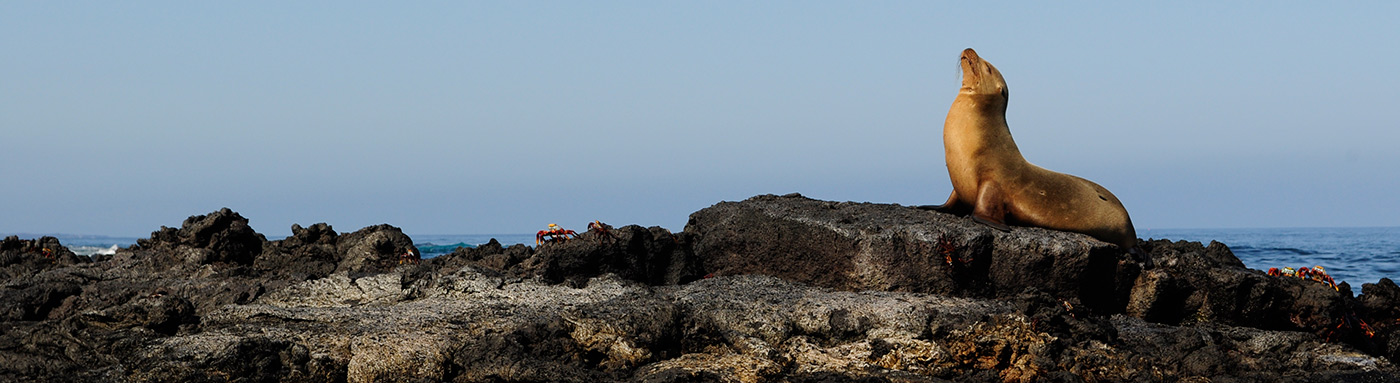
These playful animals are one of the main attractions and for many tourists the highlight of their visit to the Enchanted Isles. If you are visiting the Galapagos on a cruise tour, you will most likely encounter Sea Lions, if your itinerary includes Puerto Egas on Santiago Island you will also be able to find a large fur seal colony. Very similar, yet very different, below we highlight the uniqueness of each of these wonderful species.
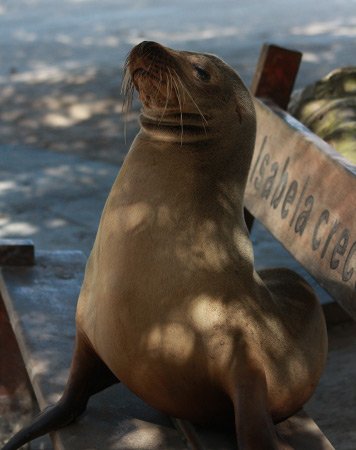
Sea Lions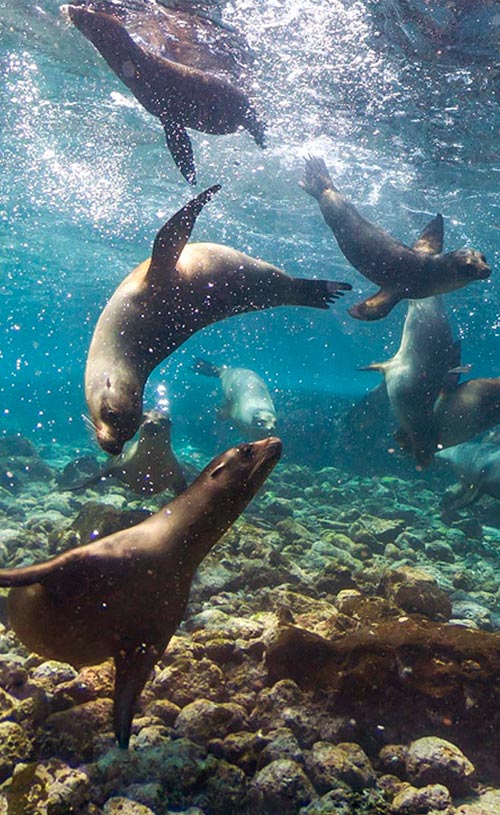
Sea Lions live in large Colonies. Adult males known as Bulls are the head of the Colony. Bulls grow to be up to 7 ft (2 m) in length and 800 lbs (363 kg). As males grow larger they fight to win dominance and for a territory including a Harem of between 5 and 25 Cows. Dominant Bulls will fight off any intruders entering the territory.
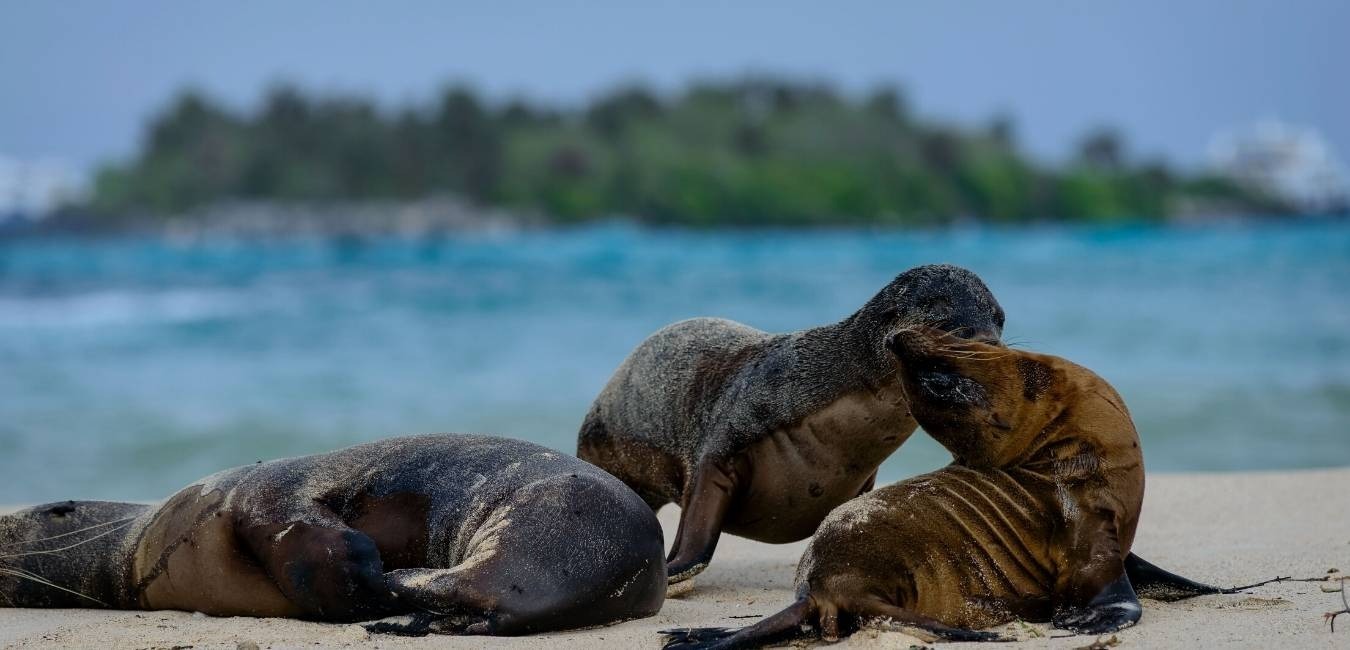
Each Cow in the Harem has a single Pup born a year after conception. The Pups have a strong bond with their mother. The Cow will nurture a Pup for up to three years. In that time the Cow and the Pup will recognize each other’s bark from the rest of the Colony.
The mothers will take the young pups with them into the water while nursing. When the Pup is 2 – 3 weeks old the Cow will mate again.
Within the Colony, Sea Lion Pups live together in a Rookery. Pups can be seen together napping, playing, and feeding. It is common to see one Cow ‘babysitting’ a group of Pups while the other cows go off to feed.
Galapagos Sea Lions are especially vulnerable to human activity. Their inquisitive and social nature makes them more likely to approach areas inhabited by humans, to come in contact with human waste and with fishing nets and hooks. Sea Lions can be seen all over the islands. Snorkeling and kayaking with the playful pups are often the highlights of a visit to the Galapagos.
 Fur Seal
The Galapagos Fur Seal is the smallest of the Southern Fur Seal reaching a length of up to 5 feet (1.50 meters) at maturity. Their coats of dark gray-brown to dusky-black nearly lead these animals to extinction, as hunters targeted them. Pups are born with a smooth and silky skin to which fur develops around 6 months of age. This made them prime targets for hunters back in the 18th century.
These animals have survived from the brink of extinction, and are the shiest creatures in the archipelago. Their numbers now compare in numbers with the sea lions. During the day they hide from the hot equatorial sun in shelves or caves of the rocky lava cliffs of the western islands. At night they feed on squid and fish avoiding the sharks, which are their natural predator.